
As a supplier of 48V lithium battery packs, I often encounter questions from customers regarding the discharging cut - off voltage of these battery packs. In this blog post, I'll delve into the concept of discharging cut - off voltage, its significance for 48V lithium battery packs, and how it impacts the performance and lifespan of the batteries.
Understanding Discharging Cut - Off Voltage
The discharging cut - off voltage is the minimum voltage level at which a battery should be discharged. When a battery is discharged below this voltage, it can lead to several detrimental effects. For lithium batteries, the discharging cut - off voltage is a critical parameter because lithium - ion cells are sensitive to over - discharging.
Over - discharging can cause irreversible damage to the battery cells. It may lead to the formation of metallic lithium on the anode, which can cause short - circuits within the cell. Moreover, over - discharging can also reduce the battery's capacity over time, leading to a shorter overall lifespan.
Discharging Cut - Off Voltage for 48V Lithium Battery Packs
A 48V lithium battery pack is typically composed of multiple lithium - ion cells connected in series. The most common lithium - ion cells used in these packs are 3.2V lithium iron phosphate (LiFePO4) cells or 3.7V lithium cobalt oxide (LiCoO2) cells.
Lithium Iron Phosphate (LiFePO4) Cells
LiFePO4 cells are widely used in 48V battery packs due to their high safety, long cycle life, and good thermal stability. A typical 48V LiFePO4 battery pack consists of 16 cells connected in series (since 16 x 3.2V = 51.2V). The recommended discharging cut - off voltage for a single LiFePO4 cell is around 2.5 - 2.8V. For a 48V LiFePO4 battery pack, the discharging cut - off voltage is approximately 40 - 44.8V (16 x 2.5V = 40V and 16 x 2.8V = 44.8V).


Lithium Cobalt Oxide (LiCoO2) Cells
LiCoO2 cells have a higher energy density compared to LiFePO4 cells. A 48V battery pack using LiCoO2 cells usually contains 13 cells in series (13 x 3.7V = 48.1V). The recommended discharging cut - off voltage for a single LiCoO2 cell is about 2.75 - 3.0V. So, for a 48V LiCoO2 battery pack, the discharging cut - off voltage is roughly 35.75 - 39V (13 x 2.75V = 35.75V and 13 x 3.0V = 39V).
Importance of Maintaining the Discharging Cut - Off Voltage
Maintaining the discharging cut - off voltage is crucial for several reasons:
Battery Safety
As mentioned earlier, over - discharging can cause safety hazards such as short - circuits and thermal runaway. By ensuring that the battery is not discharged below the cut - off voltage, we can prevent these dangerous situations from occurring.
Battery Lifespan
Over - discharging significantly reduces the battery's lifespan. By adhering to the recommended discharging cut - off voltage, we can extend the number of charge - discharge cycles the battery can undergo, ultimately saving costs in the long run.
Battery Performance
A battery that is regularly over - discharged will experience a decrease in capacity and performance. Maintaining the proper cut - off voltage helps to ensure that the battery delivers consistent power output over its lifespan.
How to Monitor and Control the Discharging Cut - Off Voltage
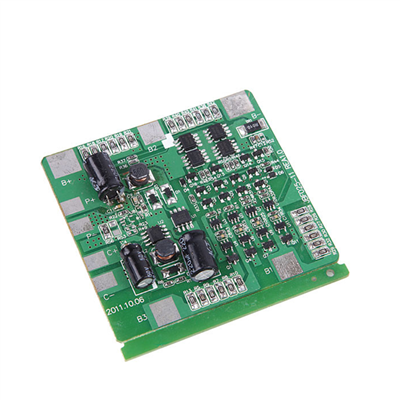
To ensure that the 48V lithium battery pack is not over - discharged, a Battery Management System (BMS) is typically used. The BMS continuously monitors the voltage of each cell in the battery pack. When the voltage of any cell reaches the discharging cut - off voltage, the BMS will disconnect the load from the battery pack, preventing further discharge.
Some BMS systems also have the ability to balance the charge between cells. This is important because if one cell in a series - connected battery pack is over - discharged while others are not, it can lead to uneven charging and discharging, further reducing the battery's performance and lifespan.
Our Product Offerings
As a supplier of 48V lithium battery packs, we offer a range of high - quality products. Our 48V13AH Lithium Ion Battery is designed with a reliable BMS to ensure that the discharging cut - off voltage is maintained, providing long - lasting performance and safety.
We also have the 48V 15.6Ah High Energy Density battery pack, which offers a higher capacity for applications that require more power. Additionally, if you are looking for a lower - voltage option, our 36V 13Ah Lithium Battery Pack is a great choice.
Conclusion
The discharging cut - off voltage is a critical parameter for 48V lithium battery packs. It plays a vital role in ensuring the safety, lifespan, and performance of the batteries. By understanding the appropriate discharging cut - off voltage for different types of lithium - ion cells and using a reliable BMS, we can maximize the benefits of these battery packs.
If you are interested in our 48V lithium battery packs or have any questions regarding the discharging cut - off voltage, please feel free to contact us for further discussion and potential procurement. We are committed to providing you with the best products and services to meet your energy storage needs.
References
- Linden, D., & Reddy, T. B. (2002). Handbook of Batteries. McGraw - Hill.
- Chen, Z., & Evans, D. J. (2012). Lithium - Ion Batteries: Science and Technologies. Springer.