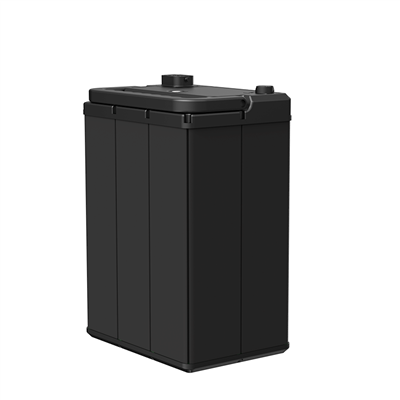

As a supplier of 12.8V 24Ah trolley batteries, I've encountered numerous inquiries from customers regarding the impact of storage temperature on the self - discharge rate of these batteries. This topic is crucial as it directly affects the battery's performance, lifespan, and overall usability. In this blog, I will delve deep into how storage temperature influences the self - discharge rate of a 12.8V 24Ah trolley battery.
Understanding Self - Discharge in Batteries
Before we explore the relationship between storage temperature and self - discharge rate, it's essential to understand what self - discharge is. Self - discharge is a natural phenomenon where a battery loses its charge over time even when it's not connected to any external load. This occurs due to internal chemical reactions within the battery. For a 12.8V 24Ah trolley battery, self - discharge can lead to a reduction in its available capacity, which means it will not be able to power the trolley for as long as expected when it's time to use it.
The Role of Temperature in Chemical Reactions
Battery operation is fundamentally based on chemical reactions. In a lithium - iron - phosphate (LiFePO4) battery, which is commonly used in 12.8V 24Ah trolley batteries, the movement of lithium ions between the anode and the cathode during charging and discharging is a chemical process. Temperature plays a significant role in these chemical reactions.
According to the Arrhenius equation, the rate of a chemical reaction increases exponentially with temperature. In simple terms, as the temperature rises, the kinetic energy of the molecules involved in the chemical reactions within the battery increases. This leads to more frequent and energetic collisions between the reactant molecules, resulting in a faster reaction rate.
Impact of High Storage Temperatures on Self - Discharge
When a 12.8V 24Ah trolley battery is stored at high temperatures, the self - discharge rate increases significantly. High temperatures accelerate the internal chemical reactions that cause self - discharge. For example, at elevated temperatures, the electrolyte in the battery may become more reactive, leading to side reactions that consume the battery's charge.
One of the common side reactions at high temperatures is the decomposition of the electrolyte. This decomposition can produce gases and other by - products that not only reduce the battery's charge but can also cause damage to the battery's internal structure over time. In addition, high temperatures can cause the electrodes to degrade more rapidly, further contributing to an increased self - discharge rate.
Studies have shown that for every 10°C increase in temperature, the self - discharge rate of a LiFePO4 battery can approximately double. So, if a battery has a self - discharge rate of 1% per month at 25°C, at 35°C, the self - discharge rate could increase to around 2% per month. This means that if you store a fully charged 12.8V 24Ah battery at a high temperature for a few months, it may lose a significant portion of its charge, and its performance when used in the trolley will be severely affected.


Impact of Low Storage Temperatures on Self - Discharge
On the other hand, low storage temperatures can also have an impact on the self - discharge rate of a 12.8V 24Ah trolley battery. At low temperatures, the chemical reactions within the battery slow down. This might seem like a good thing as it could potentially reduce the self - discharge rate. However, there are some drawbacks.
At very low temperatures, the viscosity of the electrolyte increases, which makes it more difficult for the lithium ions to move between the anode and the cathode. This can lead to a decrease in the battery's capacity and its ability to deliver high - current discharges. Although the self - discharge rate may be lower at low temperatures, the battery may not perform optimally when it's taken out of storage and used in the trolley.
Moreover, if the battery is stored at extremely low temperatures for an extended period, there is a risk of the electrolyte freezing. When the electrolyte freezes, it can damage the battery's internal structure, which can lead to permanent capacity loss and an increase in the self - discharge rate once the battery is brought back to normal operating temperatures.
Optimal Storage Temperature for 12.8V 24Ah Trolley Batteries
Based on the above analysis, it's clear that both high and low storage temperatures have their drawbacks. The optimal storage temperature for a 12.8V 24Ah trolley battery is typically between 20°C and 25°C. At this temperature range, the self - discharge rate is relatively low, and the battery can maintain its performance and lifespan.
When storing the battery, it's also important to keep it in a dry environment. Moisture can accelerate the corrosion of the battery's terminals and other metal components, which can further increase the self - discharge rate and damage the battery.
Other Factors Affecting Self - Discharge and How to Mitigate Them
In addition to temperature, there are other factors that can affect the self - discharge rate of a 12.8V 24Ah trolley battery. The state of charge (SOC) of the battery when it's stored is one such factor. It's recommended to store the battery at a partial state of charge, around 50% - 70%. Storing the battery fully charged or fully discharged for an extended period can increase the self - discharge rate and reduce the battery's lifespan.
Another factor is the quality of the battery itself. High - quality batteries from reliable manufacturers are designed to have lower self - discharge rates. As a supplier, we ensure that our 12.8V 24Ah trolley batteries are made with high - quality materials and advanced manufacturing processes to minimize the self - discharge rate.
Our Product Range and Their Suitability for Different Applications
As a supplier, we not only offer 12.8V 24Ah trolley batteries but also a wide range of other battery products, such as the 24V 150Ah Battery, 12.8V 300Ah Battery Pack, and 48V Lifepo4 Battery Pack. These batteries are suitable for various applications, including electric vehicles, solar energy storage systems, and backup power supplies.
Our batteries are designed with high energy density, long cycle life, and low self - discharge rates. Whether you need a battery for a small trolley or a large - scale energy storage project, we have the right solution for you.
Conclusion and Call to Action
In conclusion, the storage temperature has a significant impact on the self - discharge rate of a 12.8V 24Ah trolley battery. High temperatures accelerate the self - discharge process, while low temperatures can affect the battery's performance and potentially damage its internal structure. By storing the battery at the optimal temperature range and considering other factors such as the state of charge and battery quality, you can ensure that the battery maintains its performance and lifespan.
If you are in the market for high - quality 12.8V 24Ah trolley batteries or any of our other battery products, we invite you to contact us for more information and to discuss your specific requirements. Our team of experts is ready to assist you in finding the best battery solution for your needs.
References
- Linden, D., & Reddy, T. B. (2002). Handbook of Batteries. McGraw - Hill.
- Winter, M., & Brodd, R. J. (2004). What Are Batteries, Fuel Cells, and Supercapacitors?. Chemical Reviews, 104(10), 4245 - 4269.
- Arora, P., & White, R. E. (1998). Comparison of Modeling Predictions with Experimental Data from Plastic Lithium - Ion Cells. Journal of the Electrochemical Society, 145(10), 3647 - 3661.