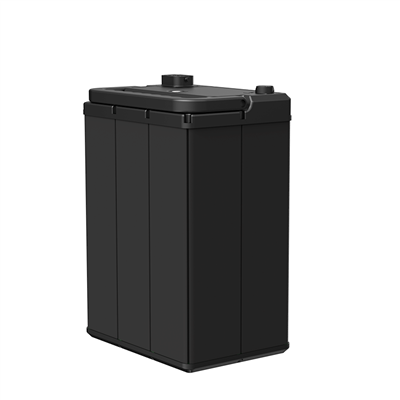

Can I use a li ion 18650 battery pack in a coffee maker?
As a supplier of Li-ion 18650 battery packs, I often get asked whether these battery packs can be used in a coffee maker. This is a question that delves into the intersection of power requirements, battery technology, and appliance compatibility. In this blog post, I'll explore the feasibility of using a Li-ion 18650 battery pack in a coffee maker, considering various factors such as power output, safety, and cost.
Understanding Li-ion 18650 Battery Packs
Before we discuss using these battery packs in a coffee maker, let's first understand what Li-ion 18650 battery packs are. The "18650" refers to the battery's size: 18mm in diameter and 65mm in length. These cylindrical lithium-ion batteries are known for their high energy density, long cycle life, and relatively low self - discharge rate.
We offer a range of Li-ion 18650 battery packs with different capacities and voltages. For example, our Long Lasting 5600mAh Power battery pack provides a substantial amount of energy storage, while the Lithium Ion Battery 3.7 V 5200mah and Rechargeable Li Ion Battery 3.7 V 5200mah are popular choices for applications that require a reliable power source.
Power Requirements of a Coffee Maker
Coffee makers typically require a significant amount of power to heat water quickly. Most household coffee makers are designed to operate on standard AC power (110 - 240V, depending on the region). The power consumption of a coffee maker can range from 600 to 1500 watts, depending on its size and features.
To determine if a Li-ion 18650 battery pack can power a coffee maker, we need to consider the power output of the battery pack. A single 18650 battery usually has a nominal voltage of 3.7V. To achieve the high voltage and power required by a coffee maker, multiple batteries need to be connected in series and parallel configurations.


Let's assume we have a coffee maker that consumes 1000 watts. Using the formula (P = VI) (where (P) is power, (V) is voltage, and (I) is current), if we assume a voltage of 12V (a common voltage for battery - powered systems), the current required would be (I=\frac{P}{V}=\frac{1000}{12}\approx83.3A). This is a very high current, and most Li-ion 18650 batteries are not rated to deliver such high currents continuously.
Safety Considerations
Safety is a crucial factor when using Li-ion 18650 battery packs. Lithium-ion batteries are sensitive to overcharging, over - discharging, and short - circuits. These conditions can lead to thermal runaway, which may cause the battery to catch fire or explode.
When using a battery pack to power a coffee maker, proper battery management systems (BMS) are essential. A BMS helps to monitor the battery's voltage, current, and temperature, and it can prevent overcharging and over - discharging. Additionally, the battery pack should be designed to handle the high power demands of the coffee maker without overheating.
Feasibility and Challenges
While it is technically possible to use a Li-ion 18650 battery pack to power a coffee maker, there are several challenges.
1. Power Output: As mentioned earlier, coffee makers require high power, and achieving the necessary voltage and current from Li-ion 18650 battery packs can be difficult. A large number of batteries would need to be connected in complex configurations, which increases the cost and complexity of the system.
2. Cost: The cost of a Li-ion 18650 battery pack large enough to power a coffee maker can be substantial. In addition to the cost of the batteries themselves, the cost of the BMS and other components also adds up.
3. Size and Weight: A battery pack capable of providing enough power for a coffee maker would be large and heavy. This may not be practical for most users, especially if portability is a concern.
Potential Solutions
Despite the challenges, there are some potential solutions for using Li-ion 18650 battery packs in coffee makers.
1. Low - Power Coffee Makers: There are some low - power coffee makers available on the market that consume less power. These coffee makers may be more suitable for battery - powered operation.
2. Hybrid Systems: A hybrid system that combines a Li-ion 18650 battery pack with a small generator or solar panel could be a viable option. The battery pack can provide the initial power to start the coffee maker, and the generator or solar panel can recharge the battery pack.
Conclusion
In conclusion, while it is possible to use a Li-ion 18650 battery pack in a coffee maker, it is not a straightforward solution. The high power requirements of coffee makers, along with safety and cost considerations, make it a challenging endeavor. However, for specific applications such as portable coffee makers or in situations where AC power is not available, with proper design and engineering, a Li-ion 18650 battery pack could potentially be used.
If you are interested in exploring the possibility of using our Li-ion 18650 battery packs for your coffee maker or other applications, we encourage you to contact us for a detailed discussion. Our team of experts can help you determine the best battery solution based on your specific requirements.
References
- Battery University. (n.d.). Lithium - ion Batteries. Retrieved from [Battery University Website]
- Coffee Maker Manufacturer Manuals. (Various). Information on power consumption and operating requirements.