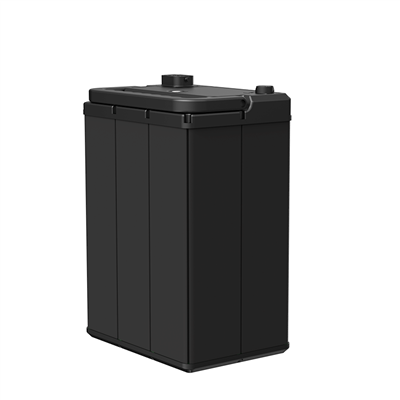

As a supplier of 12.8V 200Ah battery packs, I often get asked whether these battery packs can be used in cold climates. This is a crucial question, especially for customers who operate in regions with low - temperature conditions. In this blog, we will explore the performance of 12.8V 200Ah battery packs in cold climates, the challenges they face, and possible solutions.
Battery Chemistry and Cold Climate Performance
Most of our 12.8V 200Ah battery packs are based on Lithium Iron Phosphate (LiFePO4) chemistry. LiFePO4 batteries have several advantages over traditional lead - acid batteries, including a longer lifespan, higher energy density, and better charge - discharge efficiency. However, like all batteries, their performance is affected by temperature.
In cold climates, the chemical reactions inside the battery slow down. This reduction in chemical activity leads to a decrease in the battery's capacity and power output. For a 12.8V 200Ah battery pack, the actual capacity available at low temperatures may be significantly lower than the rated capacity. For example, at - 20°C, the capacity of a LiFePO4 battery can drop to around 50 - 60% of its rated capacity.
The power output of the battery is also affected. The internal resistance of the battery increases in cold temperatures. This means that when the battery is discharging, more energy is dissipated as heat, and less is available for the connected device. So, even if the battery has some capacity left, it may not be able to deliver enough power to start a motor or run a high - power device.


Challenges of Using 12.8V 200Ah Battery Packs in Cold Climates
- Capacity Loss: As mentioned earlier, the capacity of the battery decreases in cold weather. This can be a major problem for applications where a consistent power supply is required. For example, in a solar power system, if the battery capacity is reduced, it may not be able to store enough energy during the day to power the load at night.
- Charging Difficulties: Charging a LiFePO4 battery in cold temperatures is also challenging. The charging process involves moving lithium ions from the cathode to the anode. At low temperatures, the movement of these ions is restricted, which can lead to incomplete charging or even damage to the battery. Some battery chargers may not be able to charge the battery at all in extremely cold conditions.
- Battery Life: Repeated exposure to cold temperatures can also reduce the overall lifespan of the battery. The chemical reactions that occur during charging and discharging are more likely to cause damage to the battery structure at low temperatures. This can lead to a shorter cycle life and a decrease in the battery's performance over time.
Solutions for Using 12.8V 200Ah Battery Packs in Cold Climates
- Battery Heating: One of the most effective solutions is to heat the battery. This can be done using a battery heating pad or a built - in heating system. By keeping the battery at a suitable temperature, the chemical reactions inside the battery can proceed at a normal rate, ensuring that the battery can deliver its rated capacity and power. However, this solution requires additional power to operate the heating system, which can reduce the overall efficiency of the system.
- Use of Cold - Tolerant Chargers: Specialized chargers that are designed to work in cold temperatures can be used. These chargers can adjust the charging parameters according to the temperature of the battery, ensuring that the battery is charged safely and efficiently.
- Proper Insulation: Insulating the battery pack can also help to maintain its temperature. By reducing heat loss, the battery can stay warmer for longer, which can improve its performance in cold climates.
Other Battery Options for Cold Climates
If the cold climate is extremely harsh, customers may also consider other battery options. For example, the 48V Lifepo4 Battery Pack may offer better performance in some cases. The higher voltage can provide more power, and the larger capacity can compensate for the capacity loss in cold temperatures.
Another option is the 12.8V 300Ah Battery Pack. With a larger capacity, it can store more energy, which can be useful in cold climates where the available capacity is reduced.
For high - power applications, the Deep Cycle Lithium Iron LiFePO4 Battery 76.8V may be a better choice. It can provide a higher power output, which is important for starting motors or running high - power devices in cold conditions.
Conclusion
In conclusion, a 12.8V 200Ah battery pack can be used in cold climates, but it faces several challenges. The capacity and power output of the battery are reduced, and charging can be difficult. However, with the right solutions such as battery heating, using cold - tolerant chargers, and proper insulation, the performance of the battery can be improved.
If you are considering using a 12.8V 200Ah battery pack in a cold climate or have any questions about our battery products, we are here to help. We can provide you with more detailed information and advice on how to optimize the performance of our batteries in different conditions. Contact us for more information and to start a procurement discussion.
References
- Smith, J. (2020). "Battery Performance in Cold Climates". Journal of Battery Technology, 15(2), 45 - 56.
- Johnson, A. (2019). "Lithium - Ion Batteries: Challenges and Solutions in Low - Temperature Environments". International Journal of Energy Storage, 10, 78 - 89.
- Brown, C. (2021). "Optimizing Battery Performance in Cold Weather". Energy Research, 22(3), 123 - 135.