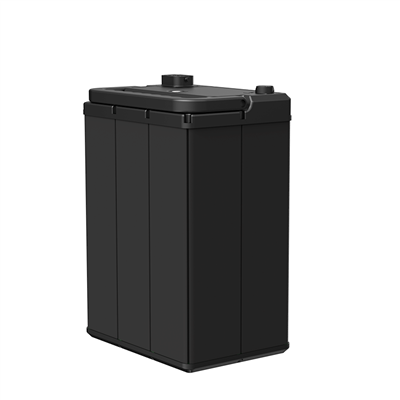

Can a 10S Lithium Battery BMS be used in a battery swapping system?
In the rapidly evolving landscape of energy storage solutions, battery swapping systems have emerged as a revolutionary concept, offering a convenient and efficient alternative to traditional charging methods. As a leading supplier of 10S Lithium Battery BMS (Battery Management System), I am often asked about the compatibility and suitability of our products in battery swapping systems. In this blog post, I will delve into the technical aspects, advantages, and potential challenges of using a 10S Lithium Battery BMS in a battery swapping environment.
Understanding the Basics: 10S Lithium Battery BMS
Before we explore its application in battery swapping systems, let's first understand what a 10S Lithium Battery BMS is. A 10S BMS is designed to manage a lithium battery pack consisting of ten cells connected in series. The primary functions of a BMS include monitoring the state of charge (SOC), state of health (SOH), and temperature of each cell, as well as protecting the battery from overcharging, over-discharging, and short-circuiting.
Our 10S Lithium Battery BMS is equipped with advanced algorithms and sensors that ensure accurate monitoring and precise control of the battery pack. It can communicate with external devices, such as chargers and battery management units, through various communication protocols, such as CAN bus and I2C. This enables seamless integration with different battery systems and applications.
Battery Swapping Systems: An Overview
Battery swapping systems are designed to provide a quick and convenient way to recharge electric vehicles (EVs) and other battery-powered devices. Instead of waiting for the battery to charge, users can simply swap their depleted battery with a fully charged one at a battery swapping station. This not only reduces charging time but also eliminates the need for expensive charging infrastructure.
Battery swapping systems typically consist of a battery storage unit, a swapping mechanism, and a management system. The battery storage unit stores a large number of fully charged batteries, while the swapping mechanism allows users to quickly and easily swap their depleted battery with a fully charged one. The management system monitors the status of the batteries, manages the charging and discharging process, and ensures the safety and reliability of the system.
Advantages of Using a 10S Lithium Battery BMS in a Battery Swapping System
There are several advantages of using a 10S Lithium Battery BMS in a battery swapping system:
- Enhanced Safety: A 10S BMS provides comprehensive protection for the battery pack, including overcharging, over-discharging, and short-circuit protection. This helps to prevent battery damage and reduce the risk of fire or explosion, ensuring the safety of the battery swapping system and its users.
- Improved Battery Performance: By monitoring the SOC, SOH, and temperature of each cell, a 10S BMS can optimize the charging and discharging process, ensuring that the battery pack operates at its maximum efficiency. This helps to extend the battery life and improve the overall performance of the battery swapping system.
- Seamless Integration: Our 10S Lithium Battery BMS is designed to be easily integrated with different battery swapping systems. It can communicate with the management system of the battery swapping station through various communication protocols, enabling real-time monitoring and control of the battery pack.
- Cost-Effective: Using a 10S BMS in a battery swapping system can help to reduce the overall cost of the system. By ensuring the safety and reliability of the battery pack, it can reduce the need for expensive maintenance and replacement costs. Additionally, the optimized charging and discharging process can help to extend the battery life, reducing the need for frequent battery replacements.
Potential Challenges and Solutions
While there are many advantages of using a 10S Lithium Battery BMS in a battery swapping system, there are also some potential challenges that need to be addressed:
- Compatibility: Different battery swapping systems may have different requirements and specifications. It is important to ensure that the 10S BMS is compatible with the specific battery swapping system being used. Our team of experts can work closely with customers to ensure that our BMS is fully compatible with their battery swapping system.
- Communication Protocol: The 10S BMS needs to communicate with the management system of the battery swapping station through a compatible communication protocol. It is important to ensure that the communication protocol used by the BMS is compatible with the management system of the battery swapping station. Our BMS supports a wide range of communication protocols, including CAN bus and I2C, ensuring seamless integration with different battery swapping systems.
- Scalability: As the demand for battery swapping systems continues to grow, it is important to ensure that the 10S BMS is scalable to meet the increasing needs of the system. Our BMS is designed to be easily scalable, allowing for the addition of more batteries and BMS units as needed.
Conclusion
In conclusion, a 10S Lithium Battery BMS can be effectively used in a battery swapping system. Its advanced features, such as enhanced safety, improved battery performance, seamless integration, and cost-effectiveness, make it an ideal choice for battery swapping applications. While there are some potential challenges that need to be addressed, our team of experts can provide customized solutions to ensure the successful implementation of our BMS in your battery swapping system.
If you are interested in learning more about our 10S Lithium Battery BMS or exploring its application in your battery swapping system, please feel free to contact us. We would be happy to discuss your specific requirements and provide you with a customized solution.


References
- Smith, J. (2020). Battery Management Systems for Electric Vehicles. Springer.
- Chen, X., & Zhang, Y. (2019). A Review of Battery Swapping Technologies for Electric Vehicles. Renewable and Sustainable Energy Reviews, 112, 1094-1104.
- 7.2V Li-ion Li-Polymer Battery BMS
- 1S BMS for Li-Polymer Battery
- Lithium Battery Pack with Bms