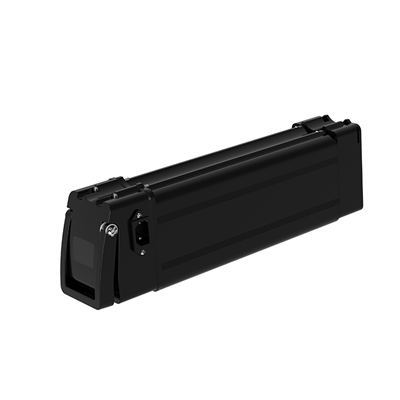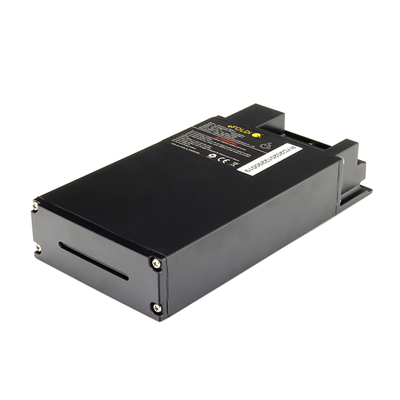
If a lithium battery is like the human body, then the Battery Management System (BMS) is its brain and nervous system.
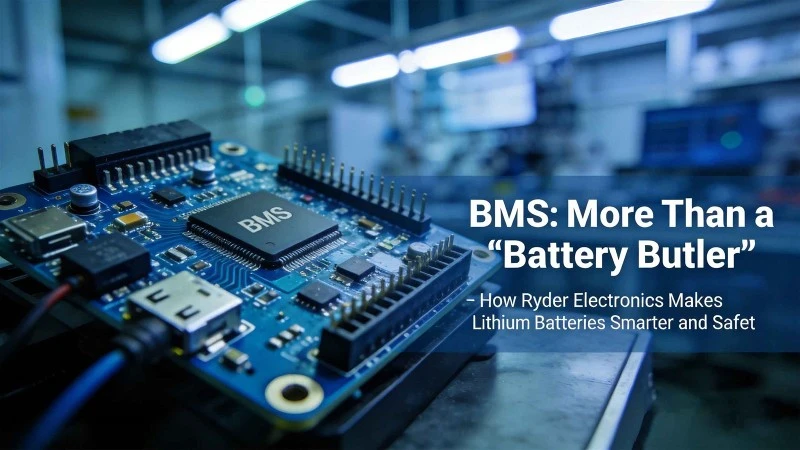
Not long ago, many people viewed BMS as little more than a "battery butler"-monitoring voltage and temperature, preventing overcharge and over-discharge. But today, the role of BMS has fundamentally changed. The industry is evolving from passive monitoring to active control, intelligent prediction, and full lifecycle management.
As a company with nearly two decades of deep experience in BMS development, Ryder Electronics has a profound understanding of this transformation-and the practical know-how to match.
Ryder's BMS capabilities span the entire chain from system architecture design to hardware and software implementation. With a core R&D team that brings over a decade of experience in power lithium battery product design, Ryder achieves precise control over critical areas including state estimation, cell balancing, thermal management, and fault diagnosis.
At the frontier of technological evolution, several important trends are reshaping the industry. Cloud-based BMS, digital twin technology, and wireless BMS are enabling real-time diagnostics, predictive maintenance, and system-wide optimization. The integration of artificial intelligence and digital twin technologies is making BMS increasingly intelligent. Meanwhile, distributed BMS architectures-with their advantages in local measurement, modular design, and distributed computing-are delivering more accurate and responsive real-time feedback for large-scale battery arrays. Ryder maintains continuous technical tracking and capability building across all these directions.
Market data underscores the growing importance of BMS. The global BMS market is expected to reach $18.59 billion in 2026 and $48.95 billion by 2032. The cloud-connected BMS optimization software market is growing at a CAGR of over 20%.
The logic is simple: as lithium battery applications become more widespread and usage conditions more complex, demands for safety, longevity, and performance will only intensify. BMS is the key to meeting these demands.
Ryder's approach is straightforward-no grandstanding, just solid engineering. From cell selection and matching to BMS algorithm optimization, from PACK structural design to charger co-development-every step undergoes rigorous testing and validation. This "systems thinking" approach to technology is the fundamental reason Ryder consistently delivers reliable solutions to its customers.