
Rated Energy (nominal)
Max Continuous Discharge
Cell Configuration
Pack Weight

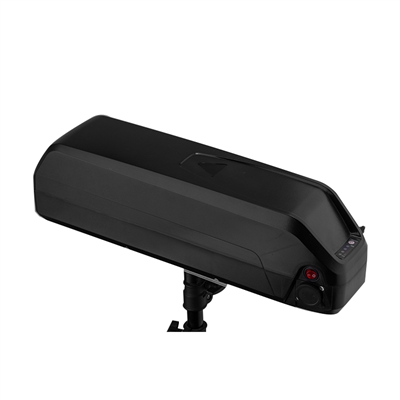
72V 50Ah 3600Wh LFP Lithium Battery with 100A Continuous Discharge
2C continuous (100A ÷ 50Ah). The pack is designed to deliver full rated current over long stretches - climbing grades at speed, carrying a loaded rider and cargo - rather than only in bursts.
Why 100A Continuous Changes the Design Brief
Here is the distinction that matters when you are matching a battery to a motor - and why it is the specification this pack is built around.
Sustained grade climbing
Voltage sag under load is what makes an electric motorcycle feel weak on a hill. A 2C pack holds its voltage, so power stays available exactly when you need it.
2C continuous
Loaded riding
Rider plus cargo plus a heavier motor and controller is exactly the case where a 50A pack heats up and throttles. Sustained 100A removes that ceiling.
100A sustained
Controller headroom
A 100A continuous pack gives your controller designer room to size the system on the motor's real demand rather than on the battery's limit.
7.2kW theoretical
3600Wh in 28kg, Addressed Before You Ask
28kg is heavier than the smaller packs in this range, and it is worth addressing directly rather than waiting for the question.
3600Wh
Rated energy
72V × 50Ah
28.0kg
Pack weight
measured
≈129Wh/kg
Pack density
3600Wh ÷ 28kg
≈157Wh
Per-cell energy
3600Wh ÷ 23 cells
Two Design Choices Worth Understanding
01
Charging is half the discharge rate - by design
Max continuous charge is 50A against 100A continuous discharge. That asymmetry is intentional. Charge stress compounds with heat, and heat is the primary accelerator of cell degradation. Charging at half the discharge rate keeps cell temperature well inside its comfortable band.
50Ah ÷ 50A ÷ 0.92 ≈ 1.1h bulk
02
23S1P - single parallel is a deliberate choice
23S sets the voltage (23 × 3.2V ≈ 73.6V nominal). 1P means one cell per series position, so every amp flows through a single cell. That makes cell selection and balancing critical - hence high-rate cells with an actively balancing BMS.
23 cells total
03
LFP chemistry in a high-current pack
Cells are lithium iron phosphate, specified here for high-rate discharge. LFP's cathode does not release oxygen at elevated temperature - the mechanism behind lithium thermal runaway - and its cycle life class sits well above lead-acid.
0 ~ 55°C charge

Sizing This Battery Against Your Motor
Every number below is arithmetic you can check. No estimation is hidden inside them.
CONTINUOUS C-RATE
100A ÷ 50Ah
CHARGE C-RATE
50A ÷ 50Ah
ENERGY
72V x 50Ah
THEORETICAL POWER
72V x 100A

Rough Motor-Power Guidance
A starting point rather than a promise. Peak motor power alone does not determine compatibility - your controller's current limit and duty cycle matter too.
Mid-power hub or mid-drive
3kW – 5kW
Comfortable, sustained riding. This is where most 72V platforms sit and where the pack has ample margin.
Performance mid-drive
5kW – 8kW
Good, with real headroom for climbing and load. The 2C continuous rating is what makes this class work without throttling.
High-power off-road class
10kW and above
Adequate for short bursts; confirm controller limits and duty cycle with us before specifying.
Monitoring Matters More on a 100A Pack
CAN / RS485 / GPS
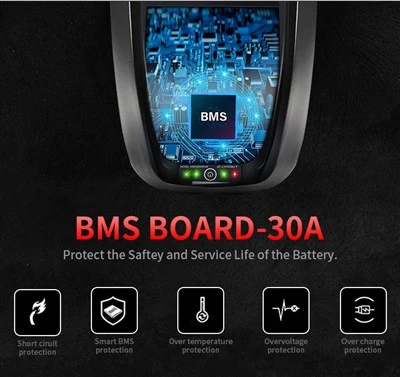
State of charge, current, cell voltage, and temperature exposed to the vehicle controller. On a pack that genuinely delivers 100A continuously, sustained high current is the hardest operating condition - cell-level visibility is how imbalance gets caught before it becomes a failure.
CAN · RS485 · GPS
IP67 sealed metal enclosure
Dust-tight and protected against temporary immersion, in a sealed metal housing with no electrolyte to top up and no watering maintenance. Maintenance-free by design.
IP67
Cold-weather honesty
Rated for discharge to -20°C, so it will operate - but available capacity at -20°C is materially lower and winter range will be shorter. Cold reduces capacity temporarily rather than damaging cells. Charge below 0°C should be reduced or paused.
-20 ~ 60°C discharge
Estimated Range at Four Duty Cycles
At 3600Wh nominal. The spread below is not vagueness - it is the difference between cruising a flat road and carrying cargo up hills at speed.
| Riding style | Wh per km | Estimated range | Typical use |
|---|---|---|---|
| Light urban, gentle terrain | 35 Wh/km | ≈ 103 km | Flat city commuting |
| Mixed riding with some acceleration | 50 Wh/km | ≈ 72 km | Daily commuting with mixed terrain |
| Loaded or hilly | 70 Wh/km | ≈ 51 km | Delivery work, cargo, rural routes |
| Aggressive, high speed | 90 Wh/km | ≈ 40 km | Performance riding, frequent hard acceleration |
Real range also depends on rider and cargo mass, wind, stop-start frequency, terrain, tire pressure, temperature, and how much capacity the BMS reserves to protect the cells. Treat this table as a planning input, not a guarantee.
Fewer, Larger Cells for the Same 3600Wh
| Consequence of 23S1P | What it means in practice | How we handle it |
|---|---|---|
| Current concentrates on one cell | Every amp passes through a single cell at that series position, so each cell must handle the full 100A | High-rate cell selection |
| Cell matching matters more | There is no second cell to share with, so one underperforming cell drags the pack | Batch cell matching report |
| Monitoring simplifies | One cell to track per series position means a cleaner BMS signal and better measurement accuracy | Active balancing BMS |
| Energy density improves | Fewer cells means less casing volume and less interconnect resistance for the same 3600Wh | ≈129Wh/kg at pack level |
| Thermal behaviour improves | Fewer cells means fewer internal heat sources per unit of capacity | Metal housing, IP67 |
Where This 72V 50Ah Battery Gets Used
Every number below is arithmetic you can check. No estimation is hidden inside them
High-power electric motorcycles
Mid-drive platforms where sustained current matters more than headline peak. The 100A continuous rating holds power on grades instead of dropping out.
Loaded delivery and cargo
Rider plus payload is precisely the duty cycle where a 50A pack heats up and throttles. 3600Wh covers a full working shift.
Electric tricycles
3600Wh fits typical three-wheeler duty cycles with margin, and 100A continuous suits the heavier drive loads they place on the battery.
Light commercial vehicles
Low-speed four-wheelers and utility vehicles in the 72V class benefit from sustained current rather than peak capability.
Battery swap and rental fleets
CAN / RS485 reporting lets a swap operator read state of charge before a rider collects the pack, reducing unnecessary cycling.
Stationary 72V storage
23S1P LFP serves 72V storage where the safety and service-life profile matters more than weight.
RYDM7250 Full Specification
| Parameter | Specification |
|---|---|
| Model | RYDM7250 |
| Cell Chemistry | LFP (LiFePO4, lithium iron phosphate) |
| Configuration | 23S1P |
| Nominal Voltage | 72V |
| Nominal Capacity | 50Ah |
| Rated Energy | 3600Wh (nominal) / 3680Wh at full charge |
| Working Voltage | 72V |
| Max Continuous Discharge Current | 100A |
| Max Continuous Charging Current | 50A |
| Peak Discharge Current | Configurable per application - contact us |
| Cycle Life | Condition-dependent; test curve supplied on request |
| Charging Temperature | 0 ~ 55°C |
| Discharging Temperature | -20 ~ 60°C |
| IP Rating | IP67 |
| Weight | 28.0kg |
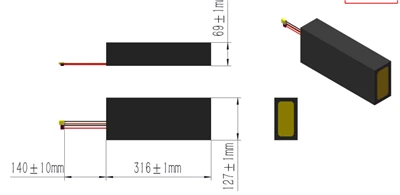
| Dimensions (L×W×H, mm) | 230 × 170 × 345 |
| Communication | CAN / RS485 / GPS |
| Cell Type | Grade-A LFP cells |
| Enclosure | Metal housing |
| Certifications | CE / UN38.3; UL available on project request |
Certifications and Pre-Shipment Testing
CE
CE Conformance
Available for this battery platform.
UN
38.3
Transport Testing
Transport test documentation for lithium battery shipment.
UL
UL on Request
Available on project request; certificate numbers supplied per model and order.
Documentation pack available on request
Datasheet with discharge curves · cycle-life report stated against your depth of discharge and temperature · cell matching report (particularly relevant for this single-parallel configuration, where every amp passes through one cell per series position) · UN38.3 test summary · user manual for the specific BMS firmware supplied. Every pack is function-tested before dispatch: capacity, voltage, protection thresholds, and communication handshake.
OEM / ODM
Customising the LFP Battery Pack for Your Programme
Cell format and pack dimensions
Adjustable within a safe envelope; 230 × 170 × 345 mm is the current standard build.
Continuous current configuration
Discharge and charge current limits set to match your motor and controller.
BMS strategy
Actively balancing, with cutoff thresholds, sleep/wake behaviour, and temperature protection set to your duty cycle.
Communication
CAN and RS485 protocol mapping to your controller or swap cabinet; GPS telematics optional.
Peak current configuration
Short-duration peak current defined per application.
Terminal, private label and charger
Connector layout configurable; enclosure and manual in your brand; matched LFP charger supplied to match.
LFP Battery Pack Quality Backbone
Shenzhen RYDBATT Electronics Co., Ltd. (headquarters) and Huizhou RYDBATT New Energy Co., Ltd. (Huizhou plant).
In-House Assembly
Pack assembly with cell matching and BMS integration under one quality system.
100% Function Tested
Capacity, voltage, protection thresholds, and communication handshake verified before dispatch.
Batch Traceability
Cell lot, assembly date, and test record tied to each serial number.
Export Documentation
Documentation handled for EU, UK, US, and other destination markets.
FAQ

01.What does 100A continuous discharge mean for a 72V 50Ah battery?
02.What motor power does a 72V 50Ah battery support?
03.How long does a 72V 50Ah 3600Wh battery take to charge?
04.What is the difference between 100A continuous and peak discharge?
05.How much does a 72V 50Ah lithium battery weigh?
06.Is 23S1P the same as 23S2P?
Hot Tags: 72v 50ah 3600wh lfp lithium battery with 100a continuous discharge, electric bicycle battery, 72v 50ah 3600wh lfp lithium battery with 100a continuous discharge manufacturer, 72v 50ah 3600wh lfp lithium battery with 100a continuous discharge supplier, 3 6 v li ion battery, diy lithium polymer battery pack, custom li ion battery pack, lithium battery cell price, lithium iron phosphate battery, portable li ion battery pack