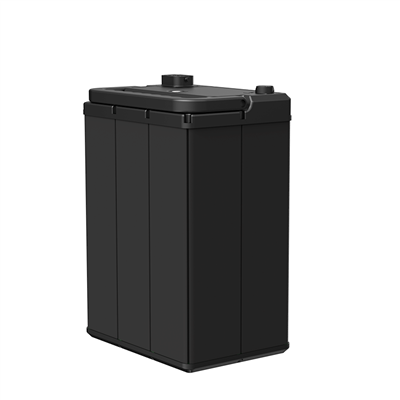

Hey there! As a supplier of LiFePO4 battery packs, I often get asked about the voltage drop during the discharge process. It's a super important topic, especially for those who rely on these batteries for various applications. So, let's dive right in and explore what causes the voltage drop in a LiFePO4 battery pack during discharge.
First off, let's understand a bit about LiFePO4 batteries. Lithium iron phosphate (LiFePO4) batteries are known for their long cycle life, high energy density, and enhanced safety compared to other lithium-ion battery chemistries. They're widely used in applications like electric vehicles, solar energy storage systems, and portable power tools.
Now, when it comes to voltage drop during discharge, it's crucial to know that a LiFePO4 battery doesn't maintain a constant voltage throughout the discharge cycle. At the beginning of the discharge, the battery has a relatively high voltage. As the battery discharges and supplies power to the load, the voltage gradually decreases.
One of the main factors contributing to voltage drop is the internal resistance of the battery. Every battery has some internal resistance, and LiFePO4 batteries are no exception. When current flows through the battery to power a device, there's a voltage drop across this internal resistance. According to Ohm's Law (V = IR), where V is the voltage drop, I is the current, and R is the resistance, the higher the current drawn from the battery, the greater the voltage drop.
For example, if you have a high - power device that requires a large amount of current, the voltage drop across the internal resistance of the LiFePO4 battery pack will be more significant. This means that the voltage available at the output terminals of the battery will be lower than the open - circuit voltage (the voltage when the battery is not connected to a load).
Another factor that affects voltage drop is the state of charge (SOC) of the battery. As the battery discharges and the SOC decreases, the voltage also drops. A fully charged LiFePO4 battery typically has a voltage around 3.6 - 3.7 volts per cell. As the battery discharges, the voltage per cell gradually decreases. When the battery is almost fully discharged, the voltage per cell can drop to around 2.5 - 2.7 volts.
The rate of discharge also plays a role. If you discharge the battery at a high rate (i.e., draw a large amount of current in a short period), the voltage drop will be more rapid compared to a slow - rate discharge. This is because a high - rate discharge causes more heat generation within the battery, which can increase the internal resistance and lead to a greater voltage drop.
Let's take a look at some real - world applications. Suppose you're using a 24V 150Ah Battery in a solar energy storage system. During the day, the battery is charged by the solar panels. When the sun goes down and the system starts to draw power from the battery, the voltage will start to drop. If you have a high - power load, like an air conditioner, the voltage drop will be more noticeable.
Similarly, a 48V Lifepo4 Battery Pack used in an electric vehicle will experience voltage drop as the vehicle is driven. The more power the vehicle's motor demands, the greater the voltage drop across the battery pack.


For smaller applications, like a 12.8V 24Ah Trolley Battery used in a portable power tool, the voltage drop during use can also affect the performance of the tool. If the voltage drops too much, the tool may not operate at its full capacity.
To manage the voltage drop, it's important to choose the right battery for your application. Make sure the battery has a sufficient capacity and can handle the current requirements of your load. You can also use a battery management system (BMS) to monitor and control the discharge process. A BMS can help prevent over - discharge, which can cause permanent damage to the battery and excessive voltage drop.
In addition, proper charging and maintenance of the LiFePO4 battery pack are essential. Over - charging or under - charging the battery can affect its performance and lead to abnormal voltage drop. Follow the manufacturer's guidelines for charging and storage to ensure the longevity and optimal performance of the battery.
As a supplier, I've seen firsthand how understanding voltage drop can make a big difference in the performance of battery - powered systems. Whether you're a DIY enthusiast building a solar power setup or a large - scale manufacturer looking for reliable battery solutions, getting a grip on this concept is key.
If you're in the market for LiFePO4 battery packs and want to learn more about how voltage drop might affect your specific application, feel free to reach out. We can have a detailed discussion about your power requirements, and I can help you choose the right battery pack that meets your needs. Our team is always ready to assist you in making the best decision for your project.
In conclusion, voltage drop in a LiFePO4 battery pack during discharge is a natural phenomenon caused by internal resistance, state of charge, and discharge rate. By understanding these factors and taking appropriate measures, you can ensure the efficient and reliable operation of your battery - powered devices. Don't hesitate to contact us if you have any questions or are interested in purchasing our high - quality LiFePO4 battery packs.
References:
- Linden, D., & Reddy, T. B. (2002). Handbook of Batteries. McGraw - Hill.
- Pesaran, A. A., Kim, G. H., & Smith, K. (2000). A comparative study of battery energy storage systems for electric and hybrid electric vehicles. Journal of Power Sources, 91(1), 1 - 13.