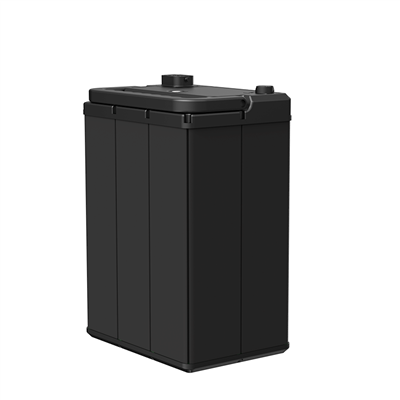

The self - discharge rate of an electric motorcycle battery is a crucial factor that significantly impacts its storage. As a well - established electric motorcycle battery supplier, I've witnessed firsthand how this rate can either enhance or undermine the performance and longevity of our products. In this blog, I'll delve into the science behind self - discharge, its effects on battery storage, and how we, as a supplier, address these challenges to provide the best solutions for our customers.
Understanding Self - Discharge
Self - discharge is an inherent characteristic of all batteries. It refers to the process by which a battery loses its charge over time even when it is not connected to any external circuit. This occurs due to internal chemical reactions within the battery. In the case of electric motorcycle batteries, which are often lithium - ion or lead - acid types, these reactions can vary in intensity and speed.
Lithium - ion batteries, such as our 72V 27.5Ah Lithium Ion Battery, generally have a lower self - discharge rate compared to lead - acid batteries. This is because the chemical structure of lithium - ion batteries is more stable, and the internal reactions that cause self - discharge are slower. On average, a lithium - ion battery may self - discharge at a rate of about 1 - 2% per month under normal storage conditions. In contrast, lead - acid batteries can self - discharge at a rate of 5 - 10% per month.
Impact on Storage Capacity
One of the most obvious effects of self - discharge on battery storage is the reduction in available capacity. When a battery self - discharges during storage, the amount of charge it can hold when it is time to use it decreases. For example, if an electric motorcycle battery has a rated capacity of 100Ah and has a self - discharge rate of 5% per month, after two months of storage, it will have lost 10Ah of its capacity. This means that when the battery is installed in the motorcycle, it will not be able to provide as much power as it originally could, resulting in a shorter riding range.
This reduction in capacity can be particularly problematic for customers who store their electric motorcycles for long periods, such as during the winter months. If the battery self - discharges too much, it may not have enough charge to start the motorcycle when it is time to use it again. As a supplier, we often receive inquiries from customers about how to maintain the battery's capacity during storage, and understanding the self - discharge rate is the first step in addressing this issue.
Impact on Battery Lifespan
The self - discharge rate also has a significant impact on the overall lifespan of the battery. Repeated deep self - discharges can cause irreversible damage to the battery's internal structure. When a battery self - discharges to a very low voltage, it can lead to the formation of metal deposits on the electrodes, which can reduce the battery's efficiency and capacity over time.
For instance, if a 60V Electric Motorcycle Lithium Battery is left in storage for an extended period and self - discharges below a certain voltage threshold, the battery may experience "voltage depression." This is a condition where the battery appears to have a very low capacity even after recharging. In severe cases, the battery may become completely unusable.
Temperature and Self - Discharge
Temperature plays a crucial role in the self - discharge rate of electric motorcycle batteries. Higher temperatures accelerate the internal chemical reactions that cause self - discharge. For example, if a battery is stored in a hot environment, say at 40°C, its self - discharge rate can be significantly higher than if it is stored at a cooler temperature, such as 20°C.
As a supplier, we always recommend that customers store their batteries in a cool and dry place. If possible, the battery should be stored at a temperature between 10°C and 25°C. This not only helps to reduce the self - discharge rate but also extends the overall lifespan of the battery.
Strategies for Minimizing Self - Discharge during Storage
To address the issue of self - discharge during storage, we offer several strategies to our customers. First, we recommend that customers charge the battery to about 50 - 60% of its capacity before storing it. This is because a battery at this charge level is more stable and has a lower self - discharge rate compared to a fully charged or completely discharged battery.
Second, we suggest that customers periodically check the battery's charge level during storage. If the battery's charge level drops below a certain threshold, it should be recharged to maintain its capacity. For lithium - ion batteries, we recommend recharging them if the charge level drops below 30%.


Finally, we provide high - quality battery chargers that are designed to maintain the battery's charge during storage. These chargers can automatically detect the battery's charge level and provide a small amount of charge to compensate for the self - discharge.
Our Product Offerings and Self - Discharge Considerations
At our company, we offer a wide range of electric motorcycle batteries, including 72V High Capacity Battery. We take self - discharge into account during the design and manufacturing process. Our lithium - ion batteries are engineered to have a low self - discharge rate, which ensures that they can be stored for longer periods without significant loss of capacity.
We also conduct extensive testing on our batteries to ensure that they meet the highest standards of quality and performance. This includes testing the self - discharge rate under different temperature and storage conditions. By doing so, we can provide our customers with accurate information about how the battery will perform during storage.
Conclusion and Call to Action
In conclusion, the self - discharge rate of an electric motorcycle battery has a profound impact on its storage. It affects the battery's capacity, lifespan, and overall performance. As a supplier, we are committed to providing our customers with high - quality batteries that have a low self - discharge rate and offering them the best advice on how to store and maintain their batteries.
If you are in the market for electric motorcycle batteries, we invite you to explore our product range. We are confident that our batteries will meet your needs and provide you with a reliable and long - lasting power source for your electric motorcycle. Whether you are a retailer looking to stock our products or an individual customer in need of a new battery, we are here to assist you. Feel free to reach out to us to discuss your requirements and start a procurement negotiation.
References
- Linden, D., & Reddy, T. B. (2002). Handbook of Batteries. McGraw - Hill.
- Chen, Z., & Liu, H. (2017). Lithium - Ion Batteries: Science and Technologies. Springer.