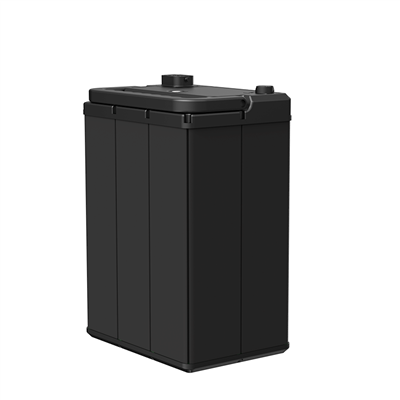

Can the Lightweight 780mAh Battery be used in a portable speaker?
In the dynamic landscape of portable electronics, the quest for the perfect power source is a never - ending journey. As a supplier of the lightweight 780mAh battery, I am often asked about its suitability for various applications, with portable speakers being a common inquiry. In this blog, we will delve into the technical aspects, performance implications, and overall feasibility of using our lightweight 780mAh battery in a portable speaker.
Technical Specifications of the 780mAh Battery
Before we can determine if the 780mAh battery is a good fit for a portable speaker, it's essential to understand its technical specifications. Our lightweight 780mAh battery is a marvel of modern battery technology. It is designed with high - energy - density materials, which allows it to store a significant amount of energy in a compact and lightweight form.
The battery operates at a standard voltage, typically around 3.7V, which is common among many portable electronic devices. This voltage is crucial as it needs to be compatible with the speaker's internal circuitry. The 780mAh capacity indicates the amount of charge the battery can hold. In simple terms, it represents the amount of electrical energy that can be delivered over time.
Power Requirements of Portable Speakers
Portable speakers come in a wide range of sizes, designs, and power requirements. Small, ultra - portable speakers may have relatively low power demands, while larger, more powerful models with enhanced bass and higher volume capabilities will require more energy.
The power consumption of a portable speaker is mainly determined by its amplifier, driver size, and the audio quality it aims to deliver. For instance, a basic, low - end portable speaker might consume around 1 - 2 watts of power during normal operation. On the other hand, a high - end, feature - rich portable speaker could consume 5 watts or more.
To calculate the runtime of a speaker using a battery, we can use the formula: Runtime (hours)=Battery capacity (mAh)×Battery voltage (V)/(Speaker power consumption (W)×1000). For example, if a speaker consumes 2 watts of power and we use our 780mAh, 3.7V battery, the estimated runtime would be (780×3.7)/(2×1000)≈1.44 hours.
Advantages of Using the 780mAh Battery in Portable Speakers
One of the most significant advantages of our lightweight 780mAh battery is its portability. In the world of portable speakers, weight and size are crucial factors. The lightweight nature of the battery means that it won't add excessive bulk to the speaker, making it easier to carry around.
Another advantage is the cost - effectiveness. For manufacturers looking to produce budget - friendly portable speakers, our 780mAh battery offers a reasonable balance between cost and performance. It provides enough power for short - to - medium - duration use, which is suitable for many casual users.
Moreover, the battery has a relatively low self - discharge rate. This means that when the speaker is not in use, the battery will retain its charge for a longer period, reducing the need for frequent recharging.
Limitations and Considerations
While there are several advantages, there are also some limitations to using the 780mAh battery in portable speakers. The most obvious limitation is the relatively short runtime. As calculated earlier, depending on the speaker's power consumption, the battery may only provide a few hours of playback. This might not be sufficient for users who plan to use the speaker for extended periods, such as during long outdoor events or parties.
Another consideration is the charging time. Smaller capacity batteries generally charge faster, but if the speaker is used frequently, the short runtime may require more frequent charging, which could be inconvenient for some users.
In addition, the battery's performance may be affected by environmental factors. Extreme temperatures, both hot and cold, can reduce the battery's capacity and overall lifespan. For example, in very cold conditions, the chemical reactions inside the battery slow down, resulting in reduced performance.
Comparing with Other Battery Options
There are other battery options available in the market for portable speakers. For example, the 37V 3200mAh Li Polymer Battery offers a much higher capacity. With a capacity of 3200mAh, it can provide significantly longer runtime compared to our 780mAh battery. However, it is likely to be larger and heavier, which may not be ideal for ultra - portable speakers.
The Reliable 3.7V Lithium Battery is another option. It shares the same voltage as our 780mAh battery but may have different capacity and performance characteristics. Some users may prefer this battery if they need a more reliable power source with a different capacity.
We also offer the Facial Cleansing Brush Battery 7.4V, which is designed for a different application but showcases our expertise in battery technology. Although it may not be directly applicable to portable speakers due to its voltage and intended use, it demonstrates our ability to develop batteries for various devices.
Conclusion and Call to Action
In conclusion, the lightweight 780mAh battery can be used in portable speakers, especially for small, low - power models or for users who only need short - term playback. It offers the benefits of portability and cost - effectiveness. However, for users who require longer runtime or have more demanding power needs, other battery options may be more suitable.


If you are a speaker manufacturer or a distributor interested in exploring the use of our lightweight 780mAh battery in your products, I encourage you to reach out to us for further discussion. We can provide samples for testing and work with you to find the best battery solution for your specific requirements.
References
- Battery Technology Handbook, 3rd Edition
- Portable Electronics Power Management Guide
- Audio Engineering Society Publications on Speaker Power Requirements