
Hey there! As a supplier of Li Ion Polymer Batteries, I've seen firsthand the importance of performance tests. These tests ensure that our batteries meet the high - standards expected by our customers. So, let's dive into the common performance tests for Li Ion Polymer Batteries.
Capacity Test
The capacity test is one of the most fundamental tests for Li Ion Polymer Batteries. It measures the amount of electrical charge a battery can store and deliver. Simply put, it tells you how long your battery can power a device.
We usually conduct this test by discharging the battery at a constant current until it reaches a predefined cut - off voltage. Then, we calculate the capacity based on the current and the time it takes to discharge. For example, if a battery discharges at a current of 1 ampere for 2 hours until it reaches the cut - off voltage, its capacity is 2 ampere - hours (Ah).
A high - capacity battery is crucial for devices that require long - term operation, like smartphones and laptops. Our Li Ion Polymer Battery undergoes strict capacity tests to ensure it can meet the power needs of various devices.
Voltage Test
Voltage is another key parameter of a battery. A voltage test measures the electrical potential difference between the positive and negative terminals of the battery.
During the charge and discharge process, the voltage of a Li Ion Polymer Battery changes. When the battery is fully charged, it has a relatively high voltage, and as it discharges, the voltage gradually decreases. We need to monitor the voltage to ensure that it stays within a safe and usable range.
For instance, a typical Li Ion Polymer Battery has a nominal voltage of 3.7V. Our Reliable 3.7V Lithium Battery is designed to maintain a stable voltage output during normal use. If the voltage drops too quickly or goes out of the normal range, it could indicate a problem with the battery, such as internal short - circuits or degradation.
Internal Resistance Test
Internal resistance is an important characteristic of a Li Ion Polymer Battery. It represents the resistance within the battery to the flow of electric current.
A low internal resistance is desirable because it means less energy is wasted as heat during the charge and discharge process. High internal resistance can lead to reduced battery efficiency, increased heat generation, and shorter battery life.
We measure the internal resistance by applying a small current pulse to the battery and measuring the resulting voltage change. If the internal resistance is too high, it might be due to factors like aging, over - charging, or over - discharging. Our lightweight Lightweight 780mAh Battery is engineered to have low internal resistance, ensuring efficient power delivery.
Cycle Life Test
Cycle life refers to the number of charge - discharge cycles a battery can undergo before its capacity drops to a certain level (usually 80% of its original capacity).
This test is crucial because it gives an indication of the battery's long - term durability. We simulate real - world usage by repeatedly charging and discharging the battery under specific conditions.
Factors like charging rate, discharging rate, and temperature can affect the cycle life of a Li Ion Polymer Battery. For example, fast charging can reduce the cycle life, while charging and discharging at moderate rates and within an optimal temperature range can extend it. Our batteries are designed to have a long cycle life, so you don't have to replace them frequently.


Self - Discharge Test
Self - discharge is the phenomenon where a battery loses its charge over time even when it's not connected to a device.
A low self - discharge rate is important, especially for devices that are not used frequently. We conduct self - discharge tests by fully charging the battery and then leaving it at rest for a certain period. After that, we measure the remaining charge.
Li Ion Polymer Batteries generally have a relatively low self - discharge rate compared to some other types of batteries. However, factors like temperature and storage conditions can affect the self - discharge rate. We take measures to minimize self - discharge in our batteries, so you can be confident that your device will be ready to use when you need it.
Thermal Performance Test
Thermal performance is critical for Li Ion Polymer Batteries. Excessive heat can cause the battery to degrade faster, reduce its performance, and even pose a safety risk.
We conduct thermal performance tests by monitoring the temperature of the battery during charging and discharging under different conditions. For example, we might test the battery at high - temperature environments to see how it responds.
To ensure good thermal performance, we use advanced materials and design techniques in our battery manufacturing. This helps to dissipate heat effectively and keep the battery within a safe temperature range.
Safety Tests
Safety is our top priority when it comes to Li Ion Polymer Batteries. We conduct a series of safety tests to ensure that our batteries are safe to use.
These tests include over - charge protection, over - discharge protection, short - circuit protection, and thermal runaway prevention. For example, in an over - charge test, we try to charge the battery beyond its normal charging limit to see if it can protect itself from damage.
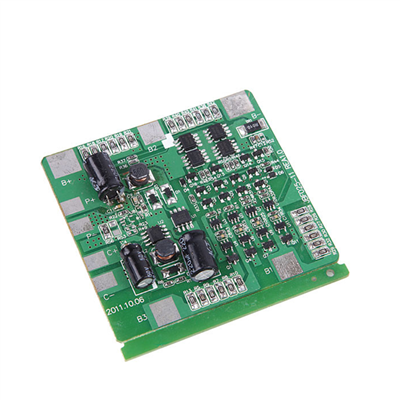
Our batteries are equipped with built - in protection circuits to prevent these dangerous situations. This gives you peace of mind when using our products.
In conclusion, these performance tests are essential for ensuring the quality, reliability, and safety of Li Ion Polymer Batteries. As a supplier, we are committed to providing high - quality batteries that meet the diverse needs of our customers. Whether you need a battery for a small electronic device or a large - scale application, we have the right solution for you.
If you're interested in our Li Ion Polymer Batteries and want to discuss your specific requirements, feel free to reach out to us. We're here to answer all your questions and help you find the best battery for your needs. Let's start a conversation and see how we can work together!
References
- Battery University: A comprehensive resource for battery knowledge and testing methods.
- Journal of Power Sources: Contains research on battery performance and testing.