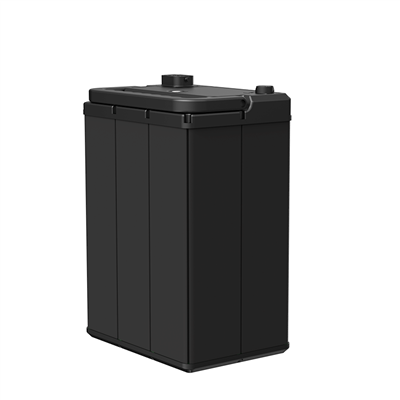

As a supplier of 4S BMS for Li-Ion Batteries, I understand the critical role that Battery Management Systems (BMS) play in ensuring the safety, performance, and longevity of lithium-ion batteries. A 4S BMS is designed for lithium-ion battery packs with four cells connected in series. In this blog post, I'll share the essential design considerations for a 4S BMS for Li-Ion Batteries, highlighting the key aspects that are crucial for an effective and reliable system.
1. Voltage Monitoring and Balancing
One of the primary functions of a 4S BMS is to monitor the voltage of each individual cell in the battery pack. Lithium-ion cells need to operate within a specific voltage range (typically between 2.5V and 4.2V per cell) to ensure safety and optimal performance. The BMS continuously measures the voltage of each of the four cells in the series configuration. If a cell's voltage exceeds the upper limit (over - voltage) or drops below the lower limit (under - voltage), the BMS takes appropriate actions, such as disconnecting the battery from the load or charger.
Cell balancing is another critical aspect. Over time, due to manufacturing tolerances, temperature variations, and different usage patterns, the voltages of individual cells in a battery pack can diverge. A 4S BMS should incorporate a cell balancing mechanism to equalize the voltages of all cells. There are two main types of cell balancing: passive and active. Passive balancing dissipates the excess energy of high - voltage cells through resistors, while active balancing transfers energy from high - voltage cells to low - voltage cells, which is more efficient but also more complex and costly. Lithium Battery Pack with Bms provides a comprehensive solution for battery packs with built - in BMS for voltage monitoring and balancing needs.
2. Current Monitoring and Protection
Current monitoring is essential for a 4S BMS. It helps in determining the state of charge (SOC) of the battery pack, as well as protecting the battery from over - current and short - circuit conditions. The BMS measures both the charging current and the discharging current. During charging, if the current exceeds the maximum safe charging current, the BMS can reduce the charging rate or disconnect the charger to prevent damage to the cells.
Similarly, during discharging, if the load draws too much current, the BMS will cut off the power supply to protect the battery. A short - circuit protection feature is also crucial. In case of a short circuit, the BMS should be able to detect it immediately and isolate the battery pack to prevent overheating, fire, or explosion. Our 7.2V Li - ion Li - Polymer Battery BMS is equipped with advanced current monitoring and protection capabilities to safeguard your battery packs.
3. Temperature Monitoring
Temperature has a significant impact on the performance and lifespan of lithium - ion batteries. High temperatures can accelerate the degradation of the battery cells and increase the risk of thermal runaway, while low temperatures can reduce the battery's capacity and performance. A 4S BMS should include temperature sensors to monitor the temperature of the battery pack.


The BMS can adjust the charging and discharging parameters based on the temperature. For example, if the temperature is too high, the BMS may reduce the charging current or stop charging altogether. Conversely, in cold conditions, it may adjust the charging rate to prevent damage to the cells. The Reliable 42V 3A Charging For 36V 10S Lithium - Ion Batteries system also takes temperature into account to ensure the safe and efficient operation of the batteries.
4. Communication Interface
A well - designed 4S BMS should have a communication interface. It allows the BMS to communicate with other components in the system, such as the charger, the load, and the vehicle's control unit (in the case of an electric vehicle application). This communication enables real - time monitoring and control of the battery pack.
Common communication protocols used in BMS include CAN (Controller Area Network), SMBus (System Management Bus), and I2C (Inter - Integrated Circuit). CAN is widely used in automotive applications due to its high reliability and long - distance communication capabilities. SMBus and I2C are suitable for smaller applications where simple communication is required. Our 4S BMS for Li Ion Battery supports multiple communication interfaces to meet different application requirements.
5. Safety and Diagnostic Features
Safety is of utmost importance in a 4S BMS for Li - Ion Batteries. The BMS should have redundant safety features to ensure that in case of a failure in one component, the battery is still protected. For example, it can have multiple over - voltage and under - voltage protection circuits, as well as redundant current sensing paths.
Diagnostic features are also valuable. The BMS can provide information about the health of the battery pack, such as the state of health (SOH), the number of charge - discharge cycles, and any detected faults. This information can be used for predictive maintenance and to determine when the battery needs to be replaced. The 1S 18650 Lithium Battery BMS also emphasizes safety and diagnostic capabilities, which can be used as a reference for the design of 4S BMS.
6. Size, Weight, and Cost
In addition to the technical aspects, the size, weight, and cost of the 4S BMS are also important design considerations. Especially in applications where space and weight are critical, such as portable electronics and electric vehicles, the BMS should be as compact and lightweight as possible.
Cost is another major factor. The design should balance the performance and features required with the cost of manufacturing. Using cost - effective components without sacrificing safety and reliability is a key challenge in BMS design. As a supplier, we strive to offer high - quality 4S BMS for Li - Ion Batteries at competitive prices.
7. Environmental Considerations
The 4S BMS should be designed to withstand different environmental conditions. It should be able to operate in a wide range of temperatures, humidity levels, and altitude. For outdoor applications, the BMS may need to be protected against dust, water, and corrosion.
In addition, the materials used in the BMS should be environmentally friendly. As the demand for sustainable products increases, ensuring that the BMS can be recycled or disposed of properly at the end of its life is becoming more important.
Conclusion
Designing a 4S BMS for Li - Ion Batteries requires a comprehensive consideration of multiple factors, including voltage monitoring and balancing, current monitoring and protection, temperature monitoring, communication interface, safety and diagnostic features, size, weight, cost, and environmental considerations. As a professional supplier of 4S BMS for Li - Ion Batteries, we have the expertise and experience to provide you with high - quality, reliable, and cost - effective BMS solutions.
If you are interested in our 4S BMS for Li - Ion Batteries or have any specific requirements, we welcome you to reach out and start a procurement discussion. We are committed to meeting your needs and providing the best support for your battery applications.
References
- Battery Management Systems for Lithium - Ion Batteries: Principles, Methods, and Applications, Chunhua Liu, et al.
- Fundamentals of Power Electronics, Robert W. Erickson and Dragan Maksimovic.