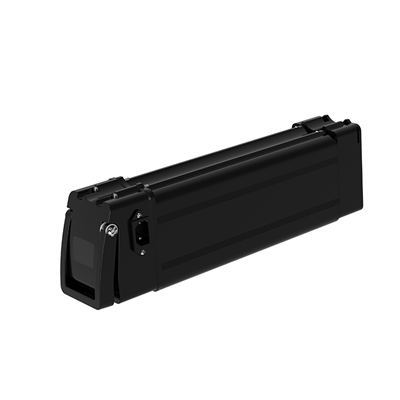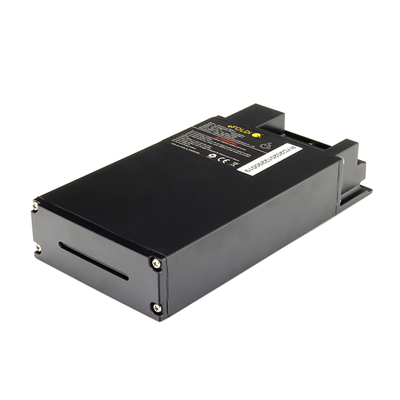
When seeing the label "IP67 protection" on the battery, many people tend to immediately assume that "it can be used for a long time in water". For instance, some stadium staff placed the IP67-protected battery of a golf cart directly on a waterlogged area, and within less than half a year, a short circuit failure occurred; there were also people who installed the IP67 energy storage battery in a low-lying area, and after being soaked by rainwater during the rainy season, it completely broke down.
In fact, the "waterproof" feature of IP67 has specific limitations and is not "indefinitely waterproof". The official definition of IP67 is "able to be briefly immersed in still water 1 meter deep for 30 minutes without affecting performance". The key points are "1 meter deep", "still water" and "30 minutes". If any of these conditions are exceeded, the protection effect will be lost. It is more like "emergency waterproofing" rather than a guarantee for "long-term underwater use".
Why can't it be soaked in water for a long time? The main reason is that the battery's sealing structure is not "absolutely seamless". The IP67 protection mainly relies on components such as sealing rings and waterproof glue to prevent water from penetrating. However, if it is soaked in water for a long time, water molecules will slowly seep through the sealing gaps. If the water contains impurities, salts (such as irrigation water from the sports field, rainwater), it will accelerate the corrosion of the battery interface and the internal cells. A test result shows that for an IP67 battery immersed in 1-meter-deep water for 24 hours, the water infiltration rate will soar from 0% to 35%, directly causing a short circuit in the internal circuit.
For practical use, the correct way to activate the IP67 protection is "for temporary immersion scenarios". For instance, when a golf cart is driven in rainy weather and gets splashed with water, or when an outdoor energy storage device is exposed to short-term heavy rain, IP67 can provide protection. However, after use, it is still necessary to promptly dry the battery surface and check if the interface is damp. If encountering extreme situations such as long-term water accumulation or floods, the battery should be moved to a dry place, or appropriate measures such as raising it or providing rainproof coverings should be taken.