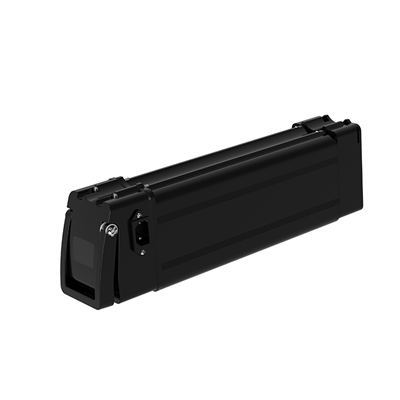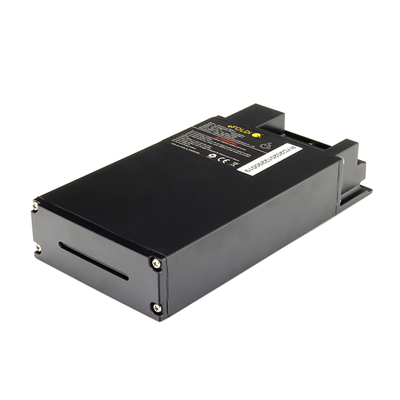
Many people have a fixation when buying batteries: the larger the capacity number, the longer the battery life must be. But in reality, they often get disappointed - even though they chose a 120Ah battery for their golf cart, the battery life is shorter than their friend's 100Ah battery; for two electric vehicles with the same marked capacity, the mileage can differ by tens of kilometers when driving at high speed.
In fact, battery life is not solely determined by capacity. Just like a larger fuel tank doesn't mean a car can travel a greater distance; it also depends on fuel consumption. At least three key factors are "holding back" the battery's lifespan.
First, there is the battery energy density. The capacity (Ah) needs to be combined with the voltage to calculate the actual storage capacity (kWh = voltage × capacity), and the energy density determines the "cost-effectiveness" of these charges. For example, a 100Ah lithium iron phosphate battery has a high energy density and is lightweight; while a lead-acid battery of the same capacity is much heavier, and the additional weight will increase the power consumption of the device, thereby reducing the battery life.
The next factor is the energy consumption of the equipment itself. With the same 5.12 kWh battery, it can travel 40 kilometers on an ordinary golf cart. However, if it is equipped with high-power lighting and audio systems, the power consumption per kilometer will increase, and the range may decrease by as much as 10 kilometers. For electric vehicles, the weight of the vehicle and high wind resistance can reduce the range even if the battery capacity is very large.
Finally, there is the impact of usage scenarios. The battery life measured in the laboratory is under ideal conditions. In reality, low temperatures will cause the battery performance to decline. The battery life in winter may be reduced by half. Frequent rapid acceleration, braking, or full-load operation will also lead to faster battery consumption.