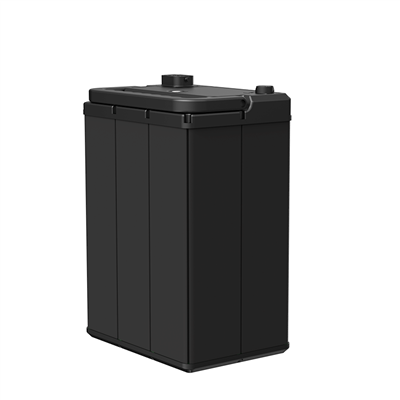

Hey there! As a supplier of 12.8V 300Ah battery packs, I often get asked about how to estimate the remaining capacity of these bad boys. It's a crucial thing to know, whether you're using them for your RV, a golf cart, or some other application. So, let's dive right in and break it down.
First off, why is it so important to estimate the remaining capacity? Well, you don't want to be left high and dry when you're out on the road or on the golf course, right? Knowing how much juice is left in your battery pack helps you plan your trips better, avoid unexpected power failures, and make sure you're getting the most out of your investment.
There are a few different methods you can use to estimate the remaining capacity of a 12.8V 300Ah battery pack. Let's take a look at some of the most common ones.
1. Voltage Measurement
One of the simplest ways to get an idea of the remaining capacity is by measuring the battery's voltage. Generally, there's a relationship between the voltage of a battery and its state of charge (SOC). For a 12.8V LiFePO4 battery pack (which is what we usually deal with), here's a rough guide:
- A fully charged 12.8V LiFePO4 battery will have a voltage of around 13.6 - 13.8V when it's at rest (not under load).
- As the battery discharges, the voltage will start to drop. When the voltage reaches around 12.4V, the battery is about 50% discharged.
- Once the voltage drops to 12V, the battery is getting pretty low, and it's time to start thinking about recharging.
However, it's important to note that voltage measurement isn't always super accurate, especially when the battery is under load. When you're using the battery to power something, the voltage can drop temporarily due to the internal resistance of the battery. So, it's best to measure the voltage when the battery has been at rest for a while.
2. Amp - Hour Meter
An amp - hour meter is a more accurate way to estimate the remaining capacity. This device measures the amount of current flowing in and out of the battery over time. It keeps a running total of the amp - hours that have been used or added to the battery.
Let's say you start with a fully charged 12.8V 300Ah battery pack. If you use 100Ah of capacity, the amp - hour meter will show that you have 200Ah remaining. It's a pretty straightforward way to keep track, but it does require installing an amp - hour meter, which can be a bit of a hassle.
3. Battery Management System (BMS)
Most modern 12.8V 300Ah battery packs come with a built - in Battery Management System (BMS). The BMS is like the brain of the battery pack. It monitors the voltage, current, and temperature of each cell in the battery pack.
Based on this information, the BMS can calculate the state of charge and remaining capacity of the battery pack. Many BMSs also have a display that shows you the SOC percentage and remaining capacity in amp - hours. This is a very convenient and accurate way to keep track of your battery's status.
4. Discharge Curve Analysis
If you have access to the discharge curve of your 12.8V 300Ah battery pack, you can use it to estimate the remaining capacity. A discharge curve shows how the voltage of the battery changes as it discharges over time.
By measuring the current voltage of the battery and comparing it to the discharge curve, you can get a pretty good idea of how much capacity is left. However, getting hold of an accurate discharge curve can be a bit tricky, as it can vary depending on factors like the battery's age, temperature, and the rate of discharge.
Real - World Considerations
In the real world, there are a few other factors that can affect the accuracy of your capacity estimates.
- Temperature: Battery performance is highly affected by temperature. In cold weather, the battery's capacity can be significantly reduced, and the voltage may drop more quickly. On the other hand, in hot weather, the battery may degrade faster.
- Load Profile: The way you use the battery can also impact the remaining capacity. If you're using a high - current load, the battery may discharge faster than if you're using a low - current load.
Our Products and Applications
As a supplier, we offer a range of high - quality 12.8V 300Ah battery packs that are suitable for various applications. Whether you're looking for a 12.8V 24Ah Golf Battery for your golf cart or a 12.8V Marine RV Power Battery for your RV or boat, we've got you covered.


We also have 48V Lifepo4 Battery Pack for applications that require higher voltage. Our battery packs are designed with safety and performance in mind, and they come with a reliable BMS to help you keep track of the remaining capacity.
Conclusion
Estimating the remaining capacity of a 12.8V 300Ah battery pack is an important skill that can help you make the most of your battery and avoid unexpected power outages. While there are a few different methods you can use, each has its own pros and cons.
If you're in the market for a high - quality battery pack and need more information on how to estimate the remaining capacity or which battery is right for your application, don't hesitate to reach out. We're here to help you make the best choice for your power needs. Whether you're a DIY enthusiast or a professional installer, we can provide you with the support and products you need.
So, if you're interested in purchasing our 12.8V 300Ah battery packs or any of our other products, feel free to contact us for a quote and to start a procurement discussion. We look forward to working with you!
References
- Battery University: A great resource for all things battery - related, including information on battery chemistry, charging, and discharging.
- Manufacturer's datasheets: These provide detailed information about the specific battery pack, including discharge curves and recommended operating conditions.