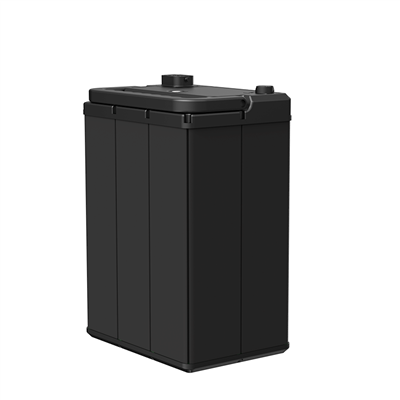

Hey there! As a supplier of 48V lithium battery packs, I often get asked about how the cells are connected in these packs. So, I thought I'd take a moment to break it down for you in a way that's easy to understand.
First off, let's talk about why we use lithium batteries in the first place. Lithium batteries are super popular because they've got a high energy density, which means they can store a lot of energy in a relatively small space. They also have a long lifespan and can handle a lot of charge and discharge cycles. These features make them perfect for all sorts of applications, like electric bikes, scooters, and even some small electric vehicles.
Now, onto the main question: how are the cells connected in a 48V lithium battery pack? Well, to get a 48V output, we usually connect multiple lithium cells together in a specific way. Most lithium cells have a nominal voltage of around 3.2V to 3.7V, depending on the type. For example, lithium iron phosphate (LiFePO4) cells typically have a nominal voltage of 3.2V, while lithium cobalt oxide (LiCoO2) cells have a nominal voltage of 3.7V.
To reach 48V, we need to connect these cells in series. When you connect cells in series, you're basically adding up their voltages. So, if we're using 3.2V LiFePO4 cells, we'd need to connect 15 of them in series (3.2V x 15 = 48V). Similarly, if we're using 3.7V LiCoO2 cells, we'd need about 13 cells in series (3.7V x 13 ≈ 48.1V).
But it's not just about getting the right voltage. We also need to consider the capacity of the battery pack. Capacity is measured in ampere - hours (Ah), and it tells us how much charge the battery can store. To increase the capacity of the battery pack, we can connect multiple strings of cells in parallel.


When you connect cells in parallel, the voltage stays the same, but the capacity adds up. For example, if you have two strings of 15 3.2V cells connected in series (each string giving you 48V), and you connect these two strings in parallel, the voltage of the battery pack will still be 48V, but the capacity will be the sum of the capacities of the two strings.
Let's say each string has a capacity of 10Ah. When you connect them in parallel, the total capacity of the battery pack will be 20Ah. This way, we can customize the battery pack to meet different requirements in terms of both voltage and capacity.
In a real - world 48V lithium battery pack, we also need to take care of a few other things. One important aspect is the battery management system (BMS). The BMS is like the brain of the battery pack. It monitors the voltage, temperature, and state of charge of each cell. It also helps to balance the cells, making sure that each cell in the pack is charged and discharged evenly. This is crucial because if one cell gets over - charged or over - discharged, it can damage the cell and even pose a safety risk.
Another thing to consider is the physical layout of the cells. We need to make sure that the cells are properly insulated and secured within the battery pack. This helps to prevent short - circuits and other electrical problems. We also need to design the battery pack in a way that allows for good heat dissipation, as lithium batteries can generate heat during charging and discharging.
Now, let's talk about some of the applications of our 48V lithium battery packs. As I mentioned earlier, electric bikes are a big market for us. A 36V 10Ah Lithium Battery is a popular choice for many electric bike users, but for those who need more power and range, a 48V battery pack is often a better option. Our 48V battery packs can provide the extra voltage and capacity needed to power electric bikes with more powerful motors and travel longer distances.
We also supply battery packs for other electric vehicles, like scooters and small electric cars. The Electric Bicycle Battery 46.8V is another product in our lineup, which is close to 48V and can be used in similar applications. And if you're looking for a more versatile option, our 36V 48V 52V Ebike Battery Pack gives you the flexibility to choose the voltage that suits your needs.
If you're in the market for a 48V lithium battery pack or any of our other products, we'd love to hear from you. Whether you're an individual looking to upgrade your electric bike or a business in need of a reliable battery solution, we can work with you to find the right product for your requirements. Just reach out to us, and we'll be happy to start a conversation about your needs and how we can help.
In conclusion, connecting cells in a 48V lithium battery pack involves a combination of series and parallel connections to achieve the desired voltage and capacity. With the right battery management system and proper design, we can ensure that our battery packs are safe, reliable, and efficient. So, if you're interested in learning more or making a purchase, don't hesitate to get in touch.
References:
- Linden, D., & Reddy, T. B. (2002). Handbook of Batteries. McGraw - Hill.
- Tremblay, O., Dessaint, L. A., & Dekkiche, A. I. (2007). A Generic Battery Model for the Dynamic Simulation of Hybrid Electric Vehicles. IEEE Transactions on Energy Conversion, 22(2), 251 - 260.