What Battery Is Used in AGV Robots
【Introduction】
Having worked in the AGV battery industry for so many years, I've seen too many customers experience frequent equipment downtime, doubled maintenance costs, and even the collapse of the entire production line because they chose the wrong batteries...
Some projects saved a few thousand dollars initially, but ended up spending several times that amount to replace batteries and fix malfunctions; some customers had AGV utilization rates of only 60% due to incompatible charging, which seriously affected warehousing and production line efficiency.
This article aims to help you avoid these pitfalls and choose the right AGV robot battery. We'll start with a comparison of battery types, focusing on why LiFePO4 (lithium iron phosphate battery) is currently the mainstream choice, and providing detailed explanations of voltage and capacity selection, charging strategies, and real-world application examples.
Whether you're working on a light-duty AMR or a medium-to-heavy-duty AGV project, this article will provide you with clear and actionable recommendations. The article specifically focuses on two key configurations: the 48V 19Ah LiFePO4 Battery Pack and the 24V 150Ah Battery, helping you quickly find the most suitable solution. Keep reading; you're sure to find something useful.
【Part 1】What Types of Batteries Are Used in AGV Robots?
Many customers come in asking "How much are your batteries?" without even knowing what type they need. Don't rush to compare prices; let's clarify the types first.
1.1 Traditional lead-acid batteries
Advantages: Low procurement cost, very mature technology, and small initial investment.
Disadvantages: Heavy (2-3 times heavier than lithium batteries of the same capacity), slow charging (usually takes 8-10 hours), short cycle life (only 300-500 cycles), requires daily maintenance (water replenishment, equalization charging), and poor low-temperature performance.
Comment from a veteran business owner: "Those still using lead-acid batteries are mostly legacy projects. I personally don't recommend them for new projects, as they have a very low cost-performance ratio in the long run."
1.2 Nickel-metal hydride/nickel-cadmium batteries (NiMH/NiCd)
These types of batteries have gradually been phased out of the mainstream AGV market. They exhibit a significant memory effect, have high environmental disposal costs, and their energy density and cycle life cannot meet the high-intensity operation requirements of modern AGVs.
1.3 Lithium-ion batteries
Ternary lithium (NMC): High energy density and light weight, but relatively weak thermal stability in industrial environments and slightly higher safety risks.
Lithium iron phosphate (LiFePO4): The current mainstream first choice in the AGV robot battery market, known for its excellent safety, ultra-long cycle life and fast charging capability.
|
characteristic |
lead-acid batteries |
NMC ternary lithium |
LiFePO4 Lithium iron phosphate |
|
Cycle life |
300–500 times |
1000–2000 times |
2000–5000+ times |
|
Security |
middle |
middle |
High (extremely low risk of thermal runaway) |
|
Charging speed |
slow |
quick |
Extremely fast (supports on-demand charging) |
|
Maintenance requirements |
High (needs to be hydrated) |
Low |
Almost maintenance-free |
|
Suitable for AGV |
Gradually phase out |
Some scenarios |
Highly recommended |
The above comparison clearly shows that LiFePO4 exhibits the most balanced and reliable overall performance in industrial AGV applications.
[Part Two] Why LiFePO4 is the #1 Battery Choice for AGV Robots
In my opinion, choosing an AGV robot battery is like choosing a long-term partner-stability, reliability, and long-term value are all indispensable.
2.1 Ultra-long cycle life → Significantly reduces TCO (Total Cost of Ownership)
High-quality LiFePO4 batteries can easily achieve 2000–5000 cycles, far exceeding the number of lead-acid batteries.
An experienced businessperson explained: "Don't just look at the battery purchase price. The truly smart approach is to consider the replacement frequency over 5-8 years, maintenance costs, and downtime losses."
2.2 High security → Industrial-grade with zero compromises
Lithium iron phosphate has an extremely stable chemical structure and a very low risk of thermal runaway. It is not prone to ignition or explosion even under impact, high temperature, or overcharge conditions. Most high-quality products have passed stringent certifications such as UL, CE, UN38.3, and IEC 62619, making them particularly suitable for densely populated factory and warehouse environments.
2.3 Fast Charging & Opportunity Charging
Supports 1-2C fast charging, allowing for quick recharging during short AGV stops or work intervals, eliminating the need for prolonged downtime. In real-world projects, AGV fleets using LiFePO4+ opportunistic charging typically see an efficiency improvement of over 30%.
2.4 Lightweight Design
Compared to traditional lead-acid batteries, LiFePO4 battery packs can reduce weight by 40–50%, making AGV structural designs more flexible, with stronger load capacity and lower energy consumption.
2.5 Maintenance-free feature
No need for water replenishment or regular equalization charging; with the intelligent BMS system, it's practically "install and forget about".
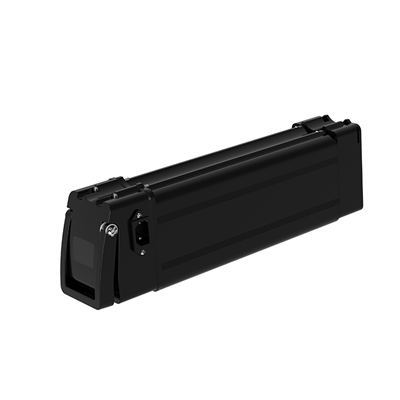
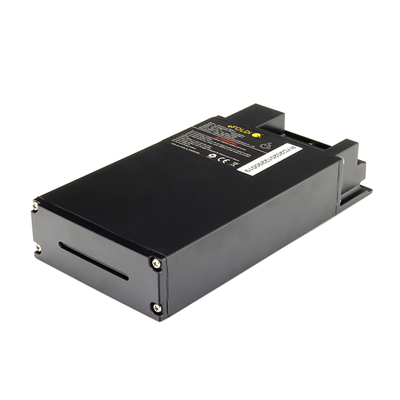
CTA #1: If your AGV voltage platform is 48V, our 48V 19Ah Lithium Iron Phosphate (LiFePO4) Battery Pack is specially designed for this type of medium-sized AGV application. Click to learn more about the specifications.
【Part 3】How to Choose the Right AGV Battery: Voltage & Capacity Explained
Many buyers simply state "I need AGV batteries" without specifying the voltage and ampere-hour rating. Below is a simple selection logic.
3.1 Voltage Selection Guide
|
AGV type |
Recommended voltage |
Applicable Products |
|
Light-duty AGV / AMR (<500kg) |
24V |
24V 150Ah Battery |
|
Medium and heavy-duty AGVs (500–3000kg) |
48V |
48V 19Ah LiFePO4 Battery Pack |
|
Heavy-duty AGV / forklift models |
72V/80V |
Customized solutions |
Key point: The voltage must be compatible with the AGV motor drive system and cannot be changed arbitrarily.
3.2 Capacity (Ah) Selection Logic
Required ampere-hours (Ah) = Continuous running time (h) × Average discharge current (A) × 1.2 (margin factor)
For example, if an AGV operates at an average current of 25A and is required to run continuously for 6 hours, then the required Ah = 6 × 25 × 1.2 = 180Ah. In this case, a 24V 150Ah is too small, and a model with a capacity of around 200Ah should be selected.
A senior engineer advises: Never choose a capacity "right on the line." Frequent deep discharges (below 20% SOC) will significantly shorten battery life. Leave a 20% margin to ensure both longevity and emergency preparedness.
3.3 Product Focus: Detailed Explanation of Two Star Configurations
Based on our years of shipping data, the following two models cover 80% of AGV application scenarios.
① 48V 19Ah Lithium Iron Phosphate Battery Pack – Designed specifically for medium-load AGVs
Applicable vehicle types: lurking AGV, roller AGV, small forklift, load capacity 500~1500kg.
Highlights:
The continuous discharge current is 50A, and the peak current is 100A, which meets the requirements for start-stop and ramping.
Built-in intelligent BMS, supports CAN/RS485 communication, and is compatible with mainstream AGV controllers (such as Beckhoff and KEBA);
It supports 1.5C fast charging, and can be charged to 80% in about 40 minutes;
Its compact dimensions (approximately 260×180×150mm) make it easy to install inside a vehicle.
SEO long-tail keywords: 48V lithium iron phosphate AGV battery, medium-load handling robot battery.
② 24V 150Ah Lithium Iron Phosphate Battery – Suitable for light-load, long-range scenarios
Applicable vehicle types: AMR, warehouse picking carts, medical delivery robots, with a load capacity of <500kg.
Highlights:
Large capacity, capable of continuous operation for 8 to 12 hours, suitable for single-shift or two-shift systems;
Built-in heating film (optional), can be charged normally at -20℃;
It offers excellent value for money; compared to lead-acid batteries of the same capacity, it recoups its cost in just 2 years.
SEO long-tail keywords: 24V deep-cycle AGV battery, lightweight AGV long-endurance power supply.
If you are unsure which configuration to use for your AGV, please feel free to contact our engineering team (contact information at the end of this article). Provide the vehicle parameters (motor power, operating current, space dimensions), and we will provide a free selection report.
CTA #2: Unsure which battery configuration your AGV needs? Click here for a free consultation with our technical team. Our engineers with 10 years of experience will provide you with the best one-on-one solution.
【Part 4】: AGV Battery Charging Strategies: What You Must Know
Choosing the right battery is only half the battle; if you choose the wrong charging method, even the best battery will have a shortened lifespan.
4.1 Three Mainstream Charging Strategies
Centralized battery swapping: suitable for high-intensity, multi-shift continuous operation scenarios.
Centralized Charging: A standard option for unified energy replenishment during a single shift or at night.
Opportunity Charging: The biggest advantage of LiFePO4 is that it allows for charging anytime, anywhere, maximizing equipment utilization.
4.2 Charging Precautions
Strictly avoid overcharging and over-discharging;
Pay attention to ambient temperature management (ideal operating temperature 15–35℃);
It must be paired with a compatible lithium-ion charger and a smart BMS system.
4.3 Practical tips from existing business operations:
Battery and charging solutions should be determined together; separate designs often lead to compatibility issues. 80% of the frequent faults we encounter in after-sales service stem from incompatible chargers or incorrect charging logic.
Part Five: Real-World Application Scenarios
No matter how much theory you talk about, it's not as good as seeing how others use it.
Case 1: A smart warehouse in Central China for an e-commerce company (48V 19Ah solution)
The original lead-acid batteries required a 2-hour shutdown for charging every day at noon when shifts changed, and their efficiency dropped significantly in the afternoon.
Replace with 48V 19Ah lithium iron phosphate, and with intermittent charging (charging brush blocks are set in the temporary storage area of the conveyor line), 3% of the power can be replenished each time the line stops for 1 minute.
Results: The AGVs operated around the clock, increasing the daily order processing volume from 18,000 to 25,000 pieces, and the equipment utilization rate from 67% to 94%.
Case 2: Logistics robot for a top-tier hospital (24V 150Ah solution)
Requirements: quiet operation, no pollution, and long battery life (round trip between the pharmacy and the ward, 3km per trip, 40 trips per day).
It uses a 24V 150Ah lithium iron phosphate battery, and in actual tests, it can run 52 trips (about 156km) on a single charge, exceeding the requirement by 30%.
Equipped with a low-temperature heating function, it remains unaffected by the 5°C environment in the underground passage during winter. The hospital reports that maintenance costs are 70% lower than the previously used nickel-metal hydride batteries.
【Part Five】: FAQ - Frequently Asked Questions
Q1: What is the best battery for AGV robots?
A: Lithium Iron Phosphate (LiFePO4) batteries are widely regarded as the best choice for AGV robots due to their superior safety, long cycle life (2000–5000 cycles), fast charging capability, and minimal maintenance requirements. Popular configurations include the 48V 19Ah LiFePO4 Battery Pack and the 24V 150Ah Battery.
Q2: How long does an AGV battery last?
A: A high-quality LiFePO4 AGV battery typically lasts 5–10 years or 2,000–5,000 charge cycles, depending on usage intensity, charging habits, and environmental conditions.
Q3: What voltage battery does an AGV use?
A: Common configurations are 24V, 36V, 48V, 72V, and 80V. Light-duty models usually use 24V, while medium to heavy-duty AGVs prefer 48V.
Q4: Can I replace a lead-acid AGV battery with lithium?
A: Yes, in most cases. Ensure voltage match and upgrade to a lithium-compatible charger. Consult specialists before swapping.
Q5: How do I charge an AGV lithium battery?
A: Use dedicated lithium chargers supporting opportunity charging. Avoid overcharging or deep discharging.
Q6: What is the difference between 48V 19Ah and 24V 150Ah AGV batteries?
A: 48V 19Ah suits higher power medium-duty AGVs; 24V 150Ah excels in long runtime light-duty applications.
Q7: Are LiFePO4 AGV batteries safe?
A: Yes. LiFePO4 is one of the safest lithium chemistries with excellent thermal stability and multiple international certifications.
Conclusion
After so many years in this industry, I've always believed in one thing: choosing the right battery is like equipping your AGV fleet with the most reliable "heart."
LiFePO4, with its long lifespan, high safety, fast charging, and maintenance-free characteristics, has become the optimal solution in the current AGV robot battery field. While it may require a slightly higher investment in the short term, it is a wise investment that significantly reduces TCO and improves efficiency in the long run.
Whether you need a 48V 19Ah LiFePO4 Battery Pack or a 24V 150Ah Battery, choosing the right configuration is half the battle won.
Ready to Power Your AGV Fleet?
You now have all the key knowledge for AGV battery selection; it's time to take action!
Explore the 48V 19Ah LiFePO4 Battery Pack →https://www.ryderelectronics.com/lifepo4-battery-pack/48v-19ah-lithium-iron-phosphate-lifepo4
View the full specifications of the 24V 150Ah Battery →https://www.ryderelectronics.com/lifepo4-battery-pack/24v-150ah-battery.
Still have questions? Contact our expert team now for free selection advice!