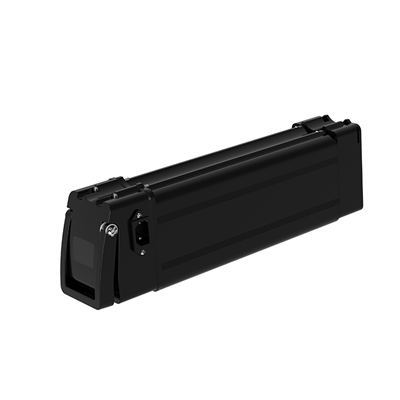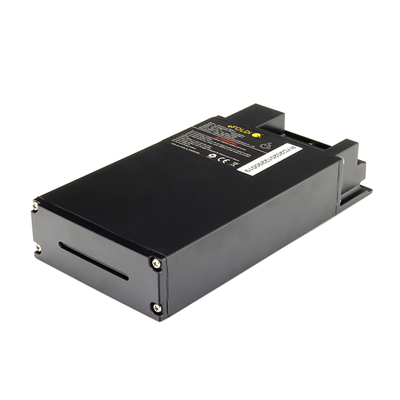
Nickel Cobalt Manganese (NCM) Lithium Battery
The theoretical specific energy of NCM batteries has been significantly improved in practical applications. Compared with lithium cobalt oxide batteries, NCM batteries can better deliver higher capacity. However, in terms of materials, NCM batteries use nickel-cobalt-manganese oxides and organic electrolytes, which do not fundamentally resolve safety concerns. If a short circuit occurs, it may generate excessive current, leading to potential safety hazards.
Lithium Iron Phosphate (LFP) Battery
The theoretical capacity is 170 mAh/g, while the practical achievable capacity is about 160 mAh/g. In terms of safety, LFP batteries exhibit high thermal stability and low electrolyte oxidation activity, resulting in superior safety performance. However, their drawbacks include low electrical conductivity, larger volume, higher electrolyte consumption, and relatively poorer cell consistency due to high capacity.
Lithium Cobalt Oxide (LCO) Battery
A key characteristic in its structure is that even when fully charged, a considerable amount of lithium ions remains in the cathode. This means the anode cannot accommodate more lithium ions migrating from the cathode. Under overcharge conditions, excess lithium ions continue to move toward the anode, where they cannot be fully intercalated and instead form metallic lithium. This metallic lithium tends to grow into dendritic structures, known as lithium dendrites. Once formed, dendrites can pierce the separator, causing internal short circuits. Additionally, the main components of the electrolyte are carbonates, which have low flash points and boiling points, making them prone to combustion or even explosion at elevated temperatures. Controlling dendrite formation is relatively easier in small-capacity batteries, which is why LCO batteries are mainly used in portable electronic devices and are not suitable for power battery applications.
Lithium Manganese Oxide (LMO) Battery
Lithium manganese oxide batteries have certain advantages. In a fully charged state, lithium ions in the cathode can be completely intercalated into the carbon structure of the anode, unlike LCO batteries where some lithium remains in the cathode. This theoretically prevents dendrite formation. However, in practice, strong external forces or poor manufacturing quality may still cause rapid lithium-ion movement during charge and discharge cycles. If the anode cannot accommodate lithium ions in time, dendrites may still form. Preventing this relies on strict quality control and testing during manufacturing. In general, qualified LMO batteries are unlikely to experience safety incidents. Their stable structure also results in much lower oxidation activity compared to LCO, and even in the case of external short circuits, the risk of lithium plating, combustion, or explosion is significantly reduced.