


-
No Output: No load response, very low or zero output voltage. Common causes: undervoltage cells, damaged MOSFET, blown FUSE, broken PCB trace.
-
Failure to Charge: Cannot charge or stops charging prematurely. Common causes: overcharge protection not reset, charger mismatch, poor cell voltage consistency.
-
Unable to Drive Load: Normal open-circuit voltage but power cuts off under load. Common causes: increased discharge MOSFET on‑resistance, overcurrent threshold too low.
-
MOSFET Burnout During Short Circuit Protection: MOSFET fails while executing short circuit protection. Common causes: high voltage from parasitic inductance, excessive turn-off loss.
-
Short Circuit Protection Failure: No protection activation during short. Common causes: faulty sense resistor, IC‑MOSFET mismatch, excessive IC internal delay.
-
No Auto‑Recovery After Short: Remains locked after short is removed. Common causes: IC lacks auto‑recovery, leakage at output terminals, load not fully disconnected.
-
Significantly Increased Internal Resistance: Severe voltage drop under discharge. Common causes: aged FUSE/PTC, increased MOSFET on‑resistance, micro‑cracks in PCB vias.
-
Temperature Protection Failure: No power cut at high temperature or no charge limit at low temperature. Common causes: NTC resistance drift, poor contact in sampling circuit, improper sensor placement.
-
Complete Board Unresponsiveness: No current in or out. Common causes: power supply line disconnected, total battery voltage below IC startup threshold, permanent lockout due to deep over‑discharge.
Professional English Translation
Popular Products

Ryder 34438 12V Li-ion Battery Pack with Solar Charging & Bluetooth – Reliabl...
The RYDER 34438 Li-ion Battery Pack (Model: Li-21700-3S4P-10.8V 20(19.6)Ah-PCM-case-with heating function) is a rugged,
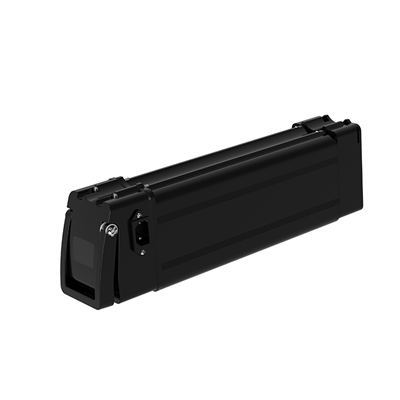
RYDB3607-3 36V 7.8Ah Industrial Lithium Battery | IP67 Rated | Smart UART/RS-...
Introducing our professional-grade 36V 7.8Ah lithium battery, engineered with a high-density 10S3P NCM/NCA cell

Premium 36V 9.6Ah Lithium Battery | IP67 Rated | Smart UART/RS-485 Communication
[Ryder established ] presents the RYDB3609 industrial-grade lithium battery, engineered for applications demanding
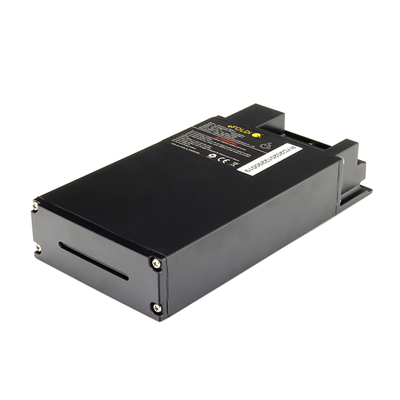
25.2V 10Ah 7S3P 24V 18650 Power Lithium Battery Pack
Engineered for high-performance applications, our 25.2V 10Ah 7-series 3-parallel (7S3P) 24V 18650 power lithium battery

10.8V 20Ah Li Ion Battery Pack With Heating Function
The RYDER 34438 Li-ion Battery Pack (Model: Li-21700-3S4P-10.8V 20(19.6)Ah-PCM-case-with heating function) is a rugged,

48V LiFePO4 Battery System For Camping & Off-Road Vehicles
A robust, multi-functional lithium battery pack designed to power electric camping vehicles and support outdoor mobile