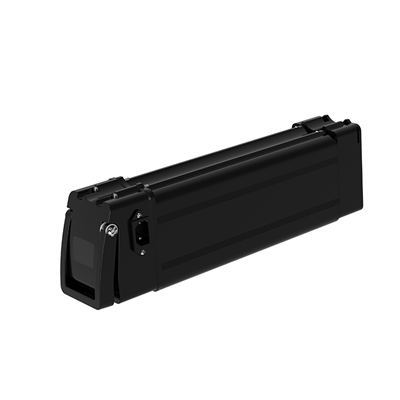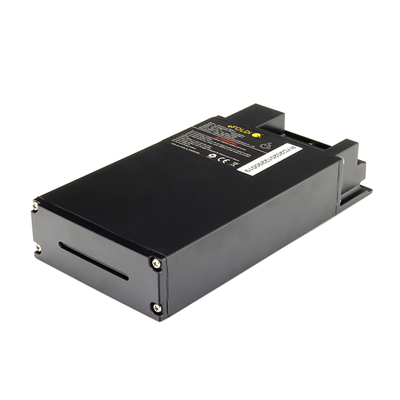
Currently, two mainstream technical architectures are adopted for power and energy storage battery packs: Module-to-Pack (MTP) and Cell-to-Pack (CTP).
1. Module-to-Pack (MTP) Technology
This technical route takes modules as the core functional units. Cells are pre-assembled into standardized modules, which are then mechanically fastened to the pack housing.
Load transfer mechanism: Rigid connection between modules and the housing is achieved via bolt fastening, with mechanical loads and vibration stress transmitted through fasteners.
Thermal management architecture: The water cooling plate exists as a standalone component separated from the housing. This design enables independent replacement and maintenance of modules, yet creates certain redundant space in layout.
Typical application: 1P52S battery pack (MTP solution, widely used for outdoor commercial & industrial energy storage cabinets)
2. Cell-to-Pack (CTP) Module-Free Technology
This technology boosts system integration by simplifying structural design. Its core feature eliminates the intermediate module layer, enabling direct integration of cells into the pack housing.
Load transfer mechanism: Bolted connections are replaced by high-strength structural adhesive bonding. This fixes cells to the housing while distributing loads evenly to mitigate localized stress concentration.
Thermal management architecture: The water cooling plate is integrally formed with the pack bottom plate. Cells are bonded directly onto the cooling plate via structural adhesive, significantly shortening heat conduction paths.
Cell OCV Inspection & Plasma Cleaning
Functions of Plasma Treatment on Cell Surfaces:
1.Remove organic contaminants, oxides and micro-impurities on cell surfaces via plasma activation;
2.Activate substrate surfaces to strengthen coating adhesion, optimize electrode wettability and guarantee uniform material bonding;
3.Improve the battery's electrochemical performance, cycle stability and long-term reliability.