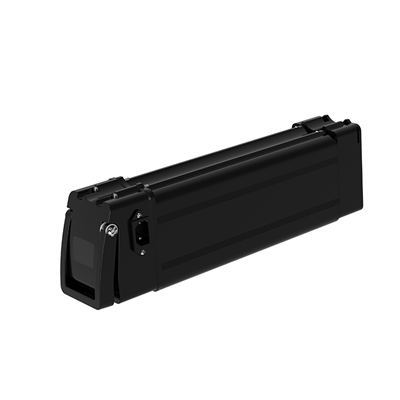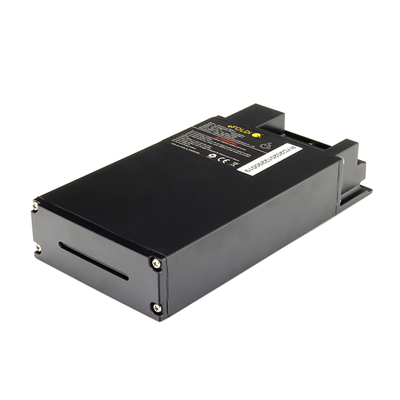
1. Cost: Initial Investment vs. Long-Term Value
Lithium-Ion Batteries: Feature a higher initial purchase cost. However, their longer lifespan (3–5 years) and lower maintenance requirements translate to significantly lower total cost of ownership (TCO) over the long run. There's no need for frequent replacements, which reduces recurring expenses.
Lead-Acid Batteries: Boast a lower upfront price, making them an attractive choice for users with tight budgets. Yet, their short service life (1–2 years) means more frequent replacements, which can drive up cumulative costs over time.
2. Size & Weight: Convenience in Installation & Operation
Lithium-Ion Batteries: Are compact and lightweight-typically 40%–60% lighter than lead-acid batteries of the same capacity. This not only simplifies installation (no heavy lifting or complex mounting) but also reduces the overall weight of the vehicle, improving maneuverability and energy efficiency.
Lead-Acid Batteries: Are bulky and heavy. Their large size requires more installation space, while the weight adds burden to the vehicle. This not only makes installation cumbersome but also negatively impacts the vehicle's handling, acceleration, and range.
3. Range Performance & Environmental Adaptability
Lithium-Ion Batteries: Excel in charge-discharge efficiency (often over 90%, compared to 70%–80% for lead-acid batteries). Even with the same capacity, they deliver longer actual range. More importantly, they maintain stable performance in low temperatures (down to -20°C for high-quality models), avoiding the significant range drop that plagues lead-acid batteries in cold weather.
Lead-Acid Batteries: Have lower charge-discharge efficiency, leading to shorter practical range. Their performance is highly sensitive to temperature-range can decrease by 30%–50% in cold environments, limiting usability in regions with harsh winters.
4. Lifespan & Cycle Count: Durability That Saves Hassle
Lithium-Ion Batteries: Offer an impressive cycle count of 500–1000 times (or even more for premium products), supporting a service life of 3–5 years. They also have better resistance to deep discharge, meaning occasional full discharges won't drastically shorten their lifespan.
Lead-Acid Batteries: Have a cycle count of only 300–500 times, resulting in a lifespan of just 1–2 years. They are highly vulnerable to deep discharge; frequent over-discharging can cut their service life in half, requiring more frequent replacements and causing operational disruptions.
5. Safety: Protection Standards You Can Trust
Lithium-Ion Batteries: Under the new national standard GB43854-2024, they are mandated to include multi-layer protection designs (overcharge, over-discharge, short-circuit, and temperature protection) and flame-retardant materials. Reputable brands (like Chengmandian) go a step further with strict quality control, ensuring excellent safety performance in daily use.
Lead-Acid Batteries: Have stable chemical properties, with a low risk of thermal runaway. However, they contain toxic lead and corrosive electrolytes, requiring careful handling during installation, use, and disposal to avoid environmental pollution or personal injury.
Chengmandian's Lithium-Ion Batteries: The Best of Both Worlds
Understanding the trade-offs between lithium-ion and lead-acid batteries, Chengmandian has developed a tailored lithium-ion battery solution that addresses user pain points:It retains the core advantages of lithium-ion technology-lightweight design, long lifespan, excellent low-temperature performance, and high charge-discharge efficiency-to meet users' pursuit of performance. At the same time, it optimizes production processes and supply chain management to offer a competitive price point that rivals lead-acid batteries for budget-conscious users.
In terms of safety, Chengmandian strictly adheres to the GB43854-2024 standard, equipping each battery with a high-precision BMS (Battery Management System) and flame-retardant casing. This ensures safety levels on par with lead-acid batteries, eliminating concerns about reliability.
Whether you prioritize long-term cost savings, vehicle maneuverability, or all-weather usability, Chengmandian's lithium-ion batteries deliver a balanced, high-value solution that outperforms traditional options.