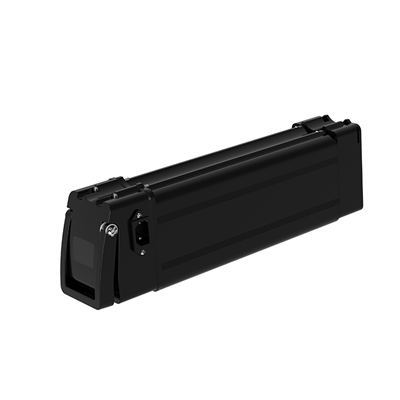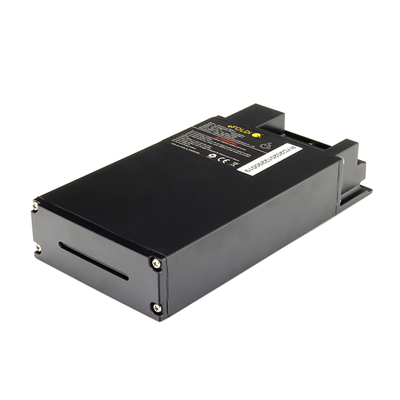
The main differences between LFP power batteries and LFP energy storage batteries lie in battery capacity, application scenarios, battery management systems (BMS), cell types, as well as performance and design.
[Battery Definition]
LFP Power Batteries
LFP power batteries are primarily used to provide motive power by converting electrical energy into mechanical energy through motors, such as driving and traction. Applications include electric vehicles, electric trains, electric trucks, electric bicycles, electric tricycles, and electric ships. Traction-type applications include indoor and outdoor towing vehicles used in schools, factories, and sports facilities, as well as forklifts. They can also serve as power sources for electric tools such as drones and electric toys.
LFP Energy Storage Batteries
LFP energy storage batteries are used to store electrical energy. They are mainly applied in solar and wind power generation systems, communication base stations, residential energy storage systems, portable power supplies, and other renewable energy storage applications.
[Basic Differences]
Energy Density and Power Density:
LFP power batteries > LFP energy storage batteries
LFP power batteries emphasize charging/discharging power performance, requiring fast charging rates, high output power, vibration resistance, high safety, and high energy density for long driving range, as well as lightweight design.
LFP energy storage batteries focus on capacity, operational stability, and lifespan. Greater attention is given to module consistency, expansion rate, energy density, and uniformity of electrode materials to achieve long service life and low cost.
[Structural Composition]
The structures differ as follows:
Cathode material: Power batteries use LFP or its derivatives, while energy storage batteries use LFP.
Anode material: Power batteries use carbon black or high-surface-area carbon materials, while energy storage batteries typically use graphite.
[Service Life]
LFP power batteries < LFP energy storage batteries
Energy storage batteries generally have higher lifespan requirements. New energy vehicles typically have a lifespan of about 8 years, while energy storage systems are designed for more than 10 years.
[Cycle Life]
LFP power batteries < LFP energy storage batteries
Power batteries typically have around 2,000 cycles, while energy storage batteries require more than 3,500 cycles. With higher charge/discharge frequency, cycle life requirements often exceed 5,000 cycles.
[Physical Appearance]
LFP power batteries are more compact and lightweight, while LFP energy storage batteries are generally larger, more rectangular, and heavier.
[Weight Requirements]
LFP power batteries < LFP energy storage batteries
Since vehicle energy consumption increases with weight, power batteries must be lightweight. Energy storage systems are large-scale (MW to 100 MW level) and have no strict weight constraints, allowing lower cost and higher safety requirements.
[Size / Volume]
Power batteries are relatively compact, while energy storage batteries are composed of multiple modules assembled into large systems, often reaching the size of shipping containers.
[Battery Capacity]
LFP power batteries < LFP energy storage batteries
[Electrical Performance]
Discharge Current: Power batteries > Energy storage batteries
Internal Resistance: Power batteries < Energy storage batteries
With similar materials, power batteries generally have slightly better quality and lower internal resistance, while energy storage batteries have relatively higher internal resistance.
[Application Requirements]
Power batteries experience large variations in discharge current and prioritize high power performance, fast charging, high output, shock resistance, safety, high energy density, and lightweight design.
Energy storage batteries typically provide stable output, with lower discharge current and longer discharge duration. Material selection must consider lithium storage capability and electrolyte/separator performance.
Energy storage systems often require continuous charging or discharging for more than two hours and must support frequency regulation and peak shaving. Energy-type batteries are more suitable, though hybrid configurations (power + energy batteries) are also possible.
[Component Cost]
Power Battery PACK:
Composed of battery modules, BMS, thermal management system, electrical system, and structural system.
Cell cost: ~80%
Pack cost (structure, BMS, housing, auxiliary materials, manufacturing): ~20%
Energy Storage System:
Includes battery system, BMS, energy management system (EMS), power conversion system (PCS), and other electrical equipment.
Battery: ~60%
PCS (inverter): ~20%
EMS: ~10%
BMS: ~5%
Others: ~5%
[Management System]
The BMS (Battery Management System) is a critical component of LFP battery packs, responsible for coordinating all functions and components, and directly affecting performance and safety.
There are differences between BMS for power batteries and energy storage batteries. Power batteries, commonly used in electric vehicles, operate under dynamic conditions and require faster power response, more precise SOC estimation, and more complex state parameter calculations. These stricter requirements must be achieved through the BMS.
https://www.ryderelectronics.com/bms-battery-management-system/