
As a supplier of li ion 18650 battery packs, I've been deeply involved in the battery industry for quite some time. In this blog, I'll share insights into the thermal runaway risk of li ion 18650 battery packs, a topic that's of utmost importance for anyone using or considering these power sources.
Understanding Li - ion 18650 Battery Packs
Li - ion 18650 battery packs are ubiquitous in various applications, from laptops and power tools to electric vehicles. The 18650 designation refers to the battery's size: 18mm in diameter and 65mm in length. These batteries are favored for their high energy density, long cycle life, and relatively low self - discharge rate.
However, like all lithium - ion batteries, they carry an inherent risk of thermal runaway. Thermal runaway is a self - accelerating process where the heat generated within the battery exceeds the heat dissipated to the surroundings. Once it starts, the temperature of the battery rises rapidly, leading to a series of chemical reactions that can cause the battery to overheat, vent, catch fire, or even explode.
Causes of Thermal Runaway in Li - ion 18650 Battery Packs
Overcharging
One of the most common causes of thermal runaway is overcharging. When a li - ion 18650 battery is overcharged, the lithium ions in the cathode are forced out at a high rate. This can lead to the formation of lithium metal dendrites on the anode. These dendrites can grow through the separator, causing an internal short - circuit. Once a short - circuit occurs, a large amount of current flows through the short path, generating a significant amount of heat and triggering thermal runaway.
Overdischarging
Overdischarging also poses a risk. When a battery is deeply discharged, the potential of the anode can become too high, causing the electrolyte to decompose. This decomposition releases heat and can also generate gases, which can increase the internal pressure of the battery. In extreme cases, the increased pressure can rupture the battery casing, leading to thermal runaway.
External Short - Circuit
An external short - circuit can happen when the positive and negative terminals of the battery pack are accidentally connected. This causes a large current to flow through the battery, generating heat at a high rate. If the heat cannot be dissipated quickly enough, the battery temperature will rise, potentially leading to thermal runaway.
Mechanical Abuse
Mechanical abuse, such as crushing, puncturing, or dropping the battery pack, can damage the internal structure of the battery. A punctured separator can allow the anode and cathode to come into direct contact, creating an internal short - circuit. Similarly, a crushed battery can cause the electrodes to deform and short - circuit, triggering thermal runaway.
High Ambient Temperature
High ambient temperatures can also contribute to thermal runaway. When the surrounding temperature is too high, the battery's self - heating rate increases. The battery has to work harder to maintain its normal operating temperature, and if the heat dissipation is insufficient, the internal temperature of the battery will rise, increasing the risk of thermal runaway.
Detecting and Preventing Thermal Runaway
Battery Management Systems (BMS)
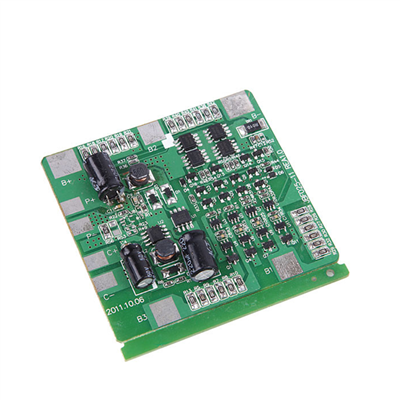
A Battery Management System is a crucial component in preventing thermal runaway. A BMS monitors the voltage, current, and temperature of each cell in the battery pack. It can prevent overcharging and overdischarging by disconnecting the battery from the charging or discharging circuit when the voltage reaches a safe limit. Additionally, it can detect abnormal temperature rises and take measures such as activating a cooling system or disconnecting the battery to prevent thermal runaway.
Thermal Management Systems
Thermal management systems are designed to maintain the battery at an optimal temperature. These systems can include heat sinks, fans, or liquid cooling systems. By dissipating the heat generated during normal operation, thermal management systems reduce the risk of thermal runaway.
Quality Control in Manufacturing
As a supplier, we pay close attention to quality control during the manufacturing process. We use high - quality materials for the electrodes, separators, and electrolytes. Strict quality control measures are in place to ensure that each battery cell meets the required standards. This includes testing for internal short - circuits, proper sealing, and consistent performance.
Our Li - ion 18650 Battery Pack Offerings
We offer a range of high - quality li - ion 18650 battery packs to meet different customer needs. Our 8000mAh 18650 Battery provides a large capacity for applications that require long - lasting power. The Lithium Ion Battery 3.7 V 5200mah is suitable for devices that operate at a standard voltage and need a reliable power source. And our Long Lasting 5600mAh Power offers a balance between capacity and performance.


Conclusion
The thermal runaway risk of li - ion 18650 battery packs is a significant concern, but with proper understanding, detection, and prevention measures, it can be effectively managed. As a supplier, we are committed to providing high - quality battery packs that are safe and reliable. We continuously invest in research and development to improve the safety features of our products.
If you are interested in our li - ion 18650 battery packs or have any questions about thermal runaway prevention, please feel free to contact us for procurement and further discussions. We look forward to working with you to meet your power needs safely and efficiently.
References
- Wang, J., Zhang, X., & Liu, J. (2019). Thermal runaway mechanism of lithium ion battery for electric vehicles: A review. Journal of Power Sources, 427, 268 - 283.
- Chen, Z., & Evans, J. W. (2017). Modeling thermal runaway of lithium - ion batteries. Journal of The Electrochemical Society, 164(12), A2605 - A2612.
- Lu, L., Han, X., Li, J., Hua, J., & Ouyang, M. (2013). A review on the key issues for lithium - ion battery management in electric vehicles. Journal of Power Sources, 226, 272 - 288.