
Hey there! As a supplier of 48V lithium battery packs, I often get asked about the maximum charging current for these batteries. So, I thought I'd write this blog to share some insights on this topic.
First off, let's understand a bit about 48V lithium battery packs. These battery packs are widely used in various applications, like electric bikes, small electric vehicles, and some energy storage systems. They're popular because of their high energy density, long lifespan, and relatively low self - discharge rate compared to other battery types.


Now, the maximum charging current of a 48V lithium battery pack isn't a one - size - fits - all number. It depends on several factors. One of the most important factors is the battery chemistry. Different types of lithium batteries, such as lithium - iron - phosphate (LiFePO4), lithium - cobalt - oxide (LiCoO2), and lithium - manganese - oxide (LiMnO2), have different charging characteristics.
For LiFePO4 batteries, which are commonly used in 48V battery packs for their safety and long cycle life, the maximum charging current is usually recommended to be around 0.5C to 1C. Here, "C" is the battery's capacity rating. For example, if you have a 48V 10Ah LiFePO4 battery pack, a 0.5C charging current would be 0.5 x 10A = 5A, and a 1C charging current would be 10A. Charging at a higher current can lead to faster charging times, but it also generates more heat. Excessive heat can damage the battery cells over time and reduce the overall lifespan of the battery pack.
On the other hand, lithium - cobalt - oxide batteries are more sensitive to high charging currents. They typically have a lower recommended maximum charging current, often around 0.2C to 0.5C. This is because LiCoO2 batteries are more prone to overheating and thermal runaway, which can be extremely dangerous.
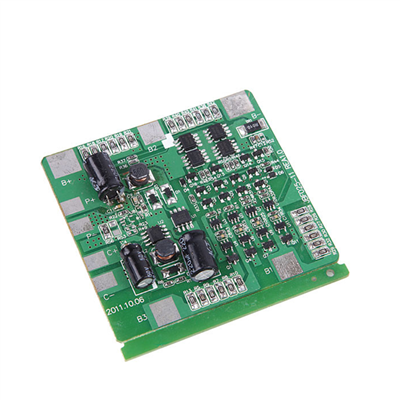
Another factor that affects the maximum charging current is the battery management system (BMS). The BMS is like the brain of the battery pack. It monitors the voltage, current, and temperature of each battery cell and ensures that the charging process is safe and efficient. A good BMS will limit the charging current to a safe level to protect the battery cells. Some advanced BMSs can even adjust the charging current based on the battery's state of charge and temperature.
The design and quality of the battery pack itself also play a role. A well - designed battery pack with proper ventilation and high - quality battery cells can handle a higher charging current compared to a poorly designed one. If the battery pack is not properly ventilated, the heat generated during charging can't dissipate effectively, which can cause the temperature to rise rapidly.
Let's talk about the implications of charging at different currents. Charging at a lower current, say 0.2C, will take a longer time but is generally safer for the battery. It allows the battery cells to charge more evenly and reduces the stress on the cells. This can result in a longer battery lifespan. For example, if you have a 48V 13Ah battery pack and you charge it at 0.2C (0.2 x 13A = 2.6A), it will take around 5 hours to fully charge the battery.
On the contrary, charging at a higher current, like 1C, can significantly reduce the charging time. Using the same 48V 13Ah battery pack as an example, charging at 1C (13A) would theoretically take only 1 hour to fully charge. However, as I mentioned earlier, this can generate more heat and may shorten the battery's lifespan if done frequently.
Now, if you're in the market for a 48V lithium battery pack, we have some great options. Check out our 48V 13Ah Ebike Battery. It's designed for electric bikes and offers a good balance between capacity and performance. We also have 36V 13Ah Lithium Battery Pack and 36.5V 7Ah Li - ion Battery Pack for different applications.
When it comes to charging these battery packs, always follow the manufacturer's recommendations. If you're not sure about the maximum charging current, you can contact us, and our technical team will be happy to help you. We understand that different customers have different needs, whether it's fast charging for commercial use or slow, safe charging for personal use.
In conclusion, the maximum charging current of a 48V lithium battery pack depends on multiple factors, including battery chemistry, BMS, and the design of the battery pack. It's important to find the right balance between charging time and battery lifespan. If you have any questions about our 48V lithium battery packs or need advice on charging, don't hesitate to reach out. We're here to assist you in making the best choice for your specific requirements. Whether you're an individual looking for a battery for your electric bike or a business in need of a reliable energy storage solution, we've got you covered.
If you're interested in purchasing our battery packs or want to discuss your specific needs further, feel free to get in touch. We're eager to start a conversation and help you find the perfect battery solution for your project.
References
- Battery University: A comprehensive resource on battery technology and charging methods.
- Journal of Power Sources: Contains research papers on lithium battery performance and safety.