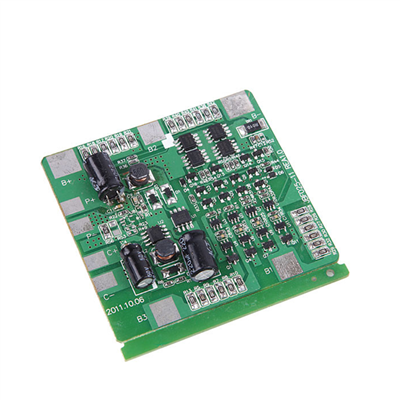

Hey there! As a supplier of the 54.6V 2A charger, I often get asked whether this charger can be used to charge a drone battery. It's a super common question, and today, I'm gonna break it down for you.
First off, let's talk about the basics of drone batteries and chargers. Drone batteries come in all shapes and sizes, with different voltage and current requirements. The voltage is like the "push" that moves the electrical charge through the battery, while the current is the amount of charge flowing per unit of time. If you use the wrong charger, it can either under - charge the battery, leaving your drone with a short flight time, or over - charge it, which can damage the battery and even pose a safety risk.
Now, let's take a closer look at our 54.6V 2A charger. The voltage of 54.6V is relatively high. Most consumer drones use batteries with voltages ranging from 3.7V (for single - cell Li - Po batteries) to around 22.2V (for 6S Li - Po batteries). A 54.6V charger is much higher than what these typical drone batteries need.
Using a charger with a higher voltage than the battery's rated voltage can cause the battery to overheat. When a battery overheats, it can lead to a chemical reaction inside the battery cells that can damage the battery's structure. In some extreme cases, it can even cause the battery to catch fire or explode. So, in general, a 54.6V 2A charger is not suitable for charging most consumer drone batteries.
But what about the current? The 2A current output of our charger means it can supply 2 amperes of electrical charge per second. For some small - scale applications where the battery can handle this current and the voltage is appropriate, 2A can be a decent charging rate. However, for drones, the current requirements also vary. Some smaller drones may have batteries that can only handle a very low charging current, say 0.5A or 1A. Using a 2A charger on these batteries can cause them to charge too quickly, which again can lead to overheating and damage.
There are, however, some industrial or high - end drones that might have higher - voltage battery systems. But even then, you need to be extremely careful. Before using our 54.6V 2A charger on a drone battery, you should always check the battery's specifications. Look for the rated voltage and current on the battery label. If the battery's rated voltage is close to 54.6V and it can handle a 2A charging current, then it might be possible to use our charger. But I still recommend doing a small - scale test first. Charge the battery for a short period and monitor its temperature. If it gets too hot, stop immediately.
Now, if you're not in the market for charging drone batteries, our chargers have other great applications. For example, we also offer an E - Bike Charger 42V 3A. This charger is specifically designed for e - bikes, which often use 42V Li - ion batteries. The 3A current output provides a relatively fast charging rate, so you can get your e - bike back on the road quickly.
Our Li Ion Battery Charger 54.6 V is also a great product. It's built with high - quality components to ensure stable and safe charging. The 54.6V output is suitable for applications that require this specific voltage, such as some high - power electric tools or larger electric vehicles.
And of course, our 54.6V 2A Charger has its own unique features. It's compact and lightweight, making it easy to carry around. It also has built - in safety features like over - voltage protection, over - current protection, and short - circuit protection. These features ensure that the battery is charged safely, even if there are some unexpected electrical issues.


If you're interested in any of our chargers, whether it's the 54.6V 2A charger, the 42V 3A e - bike charger, or the 54.6V Li - ion battery charger, we'd love to have a chat with you. We can discuss your specific needs, answer any questions you might have, and help you find the perfect charger for your application. Just reach out to us, and we'll be more than happy to assist you.
In conclusion, while a 54.6V 2A charger is not typically suitable for charging most consumer drone batteries, it has a lot of other great uses. Always make sure to match the charger's voltage and current output with the battery's requirements to ensure safe and efficient charging.
References:
- Battery charging safety guidelines from industry standards.
- Manufacturer's specifications of various drone batteries and chargers.