



In the realm of rechargeable batteries, Nickel-Metal Hydride (NiMH) batteries have long been a popular choice due to their relatively high energy density, absence of the memory effect compared to Nickel-Cadmium (NiCd) batteries, and more environmentally friendly composition. As a leading NiMH battery charger supplier, I am often asked a crucial question: Are there NiMH battery chargers with a self-diagnostic function?
The Significance of Self - Diagnostic Function in NiMH Battery Chargers
Self - diagnostic functions in NiMH battery chargers are a game - changer. They offer a level of convenience and safety that is unparalleled. A charger with self - diagnostic capabilities can detect various issues with the batteries being charged, such as overcharging, undercharging, short - circuits, and even battery degradation.
Overcharging is a common problem with NiMH batteries. When a battery is overcharged, it can lead to excessive heat generation, which not only reduces the battery's lifespan but also poses a safety risk, including the potential for leakage or even explosion in extreme cases. A self - diagnostic charger can monitor the charging process in real - time and automatically stop charging when the battery reaches its full capacity, preventing overcharging.

Undercharging, on the other hand, means that the battery does not reach its maximum capacity, resulting in reduced runtime. Self - diagnostic chargers can identify if a battery is not being charged properly and adjust the charging parameters accordingly to ensure a full charge.
Short - circuits can occur within a battery or in the charger itself. A self - diagnostic charger can quickly detect a short - circuit and shut down the charging process to prevent damage to the charger and the battery. Additionally, as NiMH batteries age, their internal resistance changes, and they may experience degradation. A charger with self - diagnostic capabilities can analyze the battery's condition and provide an indication of its health, allowing users to decide whether to replace the battery or not.
Our Range of NiMH Battery Chargers with Self - Diagnostic Function
As a supplier, we understand the importance of self - diagnostic functions in NiMH battery chargers. That's why we offer a wide range of chargers equipped with this advanced feature.
Our 16 Slot NiMH Charger with LCD Display is a powerful and versatile option. With 16 charging slots, it can charge multiple NiMH batteries simultaneously. The LCD display provides real - time information about the charging status of each battery, including voltage, current, and charging time. The self - diagnostic function continuously monitors each battery during the charging process. If any issues are detected, such as overcharging or a short - circuit, the charger will immediately stop charging the affected battery and display an error message on the LCD screen.
For those who need to charge fewer batteries at a time, our 8 Slot NiMH Charger with LCD Display is an excellent choice. It offers the same self - diagnostic capabilities as the 16 - slot charger but in a more compact form. The LCD display makes it easy to monitor the charging process, and the self - diagnostic function ensures the safety and longevity of the batteries.
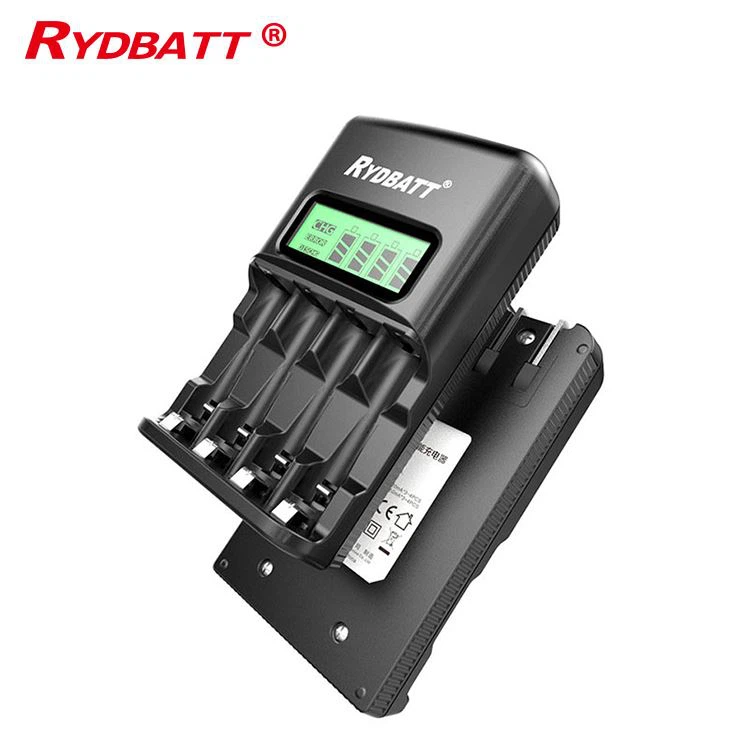
Our 4 Slot NiMH Charger with LCD Display is ideal for home use or for those who only need to charge a few batteries occasionally. Despite its smaller size, it is packed with features. The self - diagnostic function works just as effectively, providing peace of mind that the batteries are being charged safely and efficiently.
How the Self - Diagnostic Function Works
The self - diagnostic function in our chargers is based on a combination of advanced sensors and intelligent algorithms. The sensors continuously measure various parameters of the battery, such as voltage, current, and temperature. These measurements are then fed into the charger's microcontroller, which uses pre - programmed algorithms to analyze the data.
For example, when the charger starts charging a battery, it first measures the initial voltage of the battery. Based on this measurement, the charger determines the battery's initial state of charge. As the charging process progresses, the charger monitors the voltage increase. If the voltage rises too quickly or does not reach the expected level, the charger's self - diagnostic function will detect an issue, such as a faulty battery or a problem with the charging circuit.
The temperature sensor is also crucial. As the battery charges, its temperature will rise slightly. However, if the temperature rises too rapidly or exceeds a certain threshold, the self - diagnostic function will recognize this as a sign of a problem, such as overcharging or a short - circuit, and take appropriate action.
Benefits for Different Users
Our NiMH battery chargers with self - diagnostic functions are suitable for a wide range of users.
For consumers, these chargers offer peace of mind. Whether you use NiMH batteries in your digital cameras, remote controls, or toys, you can be confident that the batteries are being charged safely and efficiently. The self - diagnostic function extends the lifespan of the batteries, saving you money in the long run by reducing the need for frequent battery replacements.
For businesses, such as those in the electronics manufacturing or rental industries, our chargers are a valuable asset. They ensure that the batteries used in their products or equipment are always in good condition, reducing downtime and improving customer satisfaction. The ability to quickly identify and address battery issues also helps in maintaining a high - quality product or service.
Contact Us for Procurement
If you are interested in our NiMH battery chargers with self - diagnostic functions, we invite you to contact us for procurement. Our team of experts is ready to assist you in choosing the right charger for your needs. Whether you need a single charger for personal use or a large quantity for business purposes, we can provide you with the best solutions at competitive prices.
References
- "Nickel - Metal Hydride Batteries: Principles and Applications" by John B. Goodenough and Yutaka Tsutsumi.
- "Battery Management Systems: Design by Modeling and Identification" by Patrick Barrade and Fabien Guillaud.


