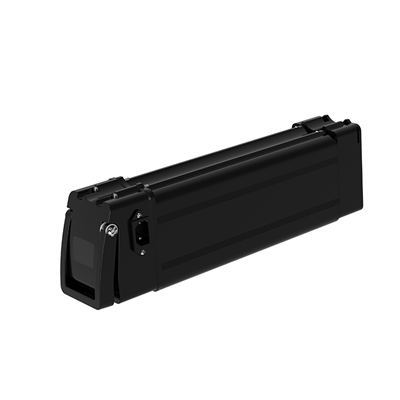


Shenzhen Ryder Electronics Co., Ltd. is one of the leading manufacturers and suppliers of 12.8v 100ah lifepo4 battery in China. Welcome to buy CE approved batteries in stock here and get free sample from our factory. All customized products are with high quality and low price.
Complete Guide to 12.8V 100Ah LiFePO4 Batteries: Performance, Applications, and Buying Recommendations

If you are looking for a reliable deep-cycle battery for your RV, solar storage system, or boat, the 2.8V 100Ah LiFePO4 (lithium iron phosphate) battery is likely one of the most cost-effective options on the market.
However, "high cost-performance ratio" does not mean "suitable for everyone". Before making recommendations, let's state our conclusion:
- If you use your batteries more than 200 times a year, the long-term cost advantage of lithium iron phosphate batteries is very significant.
- If your equipment is weight-sensitive (such as a yacht or small motorhome), a weight reduction of more than 50% makes a real difference.
- If you are currently using traditional lead-acid batteries and your replacement cycle is less than 3 years, this article will tell you whether upgrading is worthwhile.
I.Key Features: Core Technological Advantages of Lithium Iron Phosphate Batteries
1. Why is it safer than other lithium batteries?
Lithium batteries on the market are mainly divided into three categories: lithium iron phosphate (LiFePO4), ternary lithium (NCM/NCA), and lithium manganese oxide (LMO). For ordinary users, the most important thing is thermal stability-in case of an accident, which type of battery is less likely to "explode".
The thermal decomposition temperature of lithium iron phosphate is approximately 270°C, while that of ternary lithium phosphate is only 150–200°C. This difference means that in practical use, even if an abnormality occurs due to a collision or charger malfunction, the probability of thermal runaway in lithium iron phosphate is much lower. This is why it is widely used in energy storage and power bank applications, where safety is always the top priority.
2. BMS is not a simple fuse.
The BMS (Battery Management System) inside the battery essentially acts as both the "brain" and the "bodyguard." Its responsibilities include:
Cell balancing: The capacity of each cell in a battery pack is always slightly different. The BMS balances them to keep them in sync, preventing one cell from dragging down the entire pack.
Overcharge protection: If the voltage of any cell exceeds 3.65V, the charging circuit will be immediately cut off.
Over-discharge protection: Automatically disconnects the circuit when the voltage drops to 2.5V to prevent permanent capacity loss.
Overcurrent and short-circuit protection: It responds instantly to abnormal current, usually within milliseconds, and can save lives in the event of a real accident.
Temperature monitoring: Charging and discharging will be suspended if the temperature exceeds the safe range. Some models also have a heating function, which can heat the battery to a safe temperature before charging, even at low temperatures.
Buying Tips: The quality of BMS (Battery Management Systems) varies greatly on the market. Before buying, it's best to ask about the rated continuous discharge current and whether it uses passive or active balancing. Passive balancing is cheaper but less efficient; active balancing is recommended for large-capacity battery packs.
3. The fast charging capability and efficiency are so good, you'll never want to go back once you've used it.
A 12.8V 100Ah lithium iron phosphate battery is recommended to be charged with a 50A current, and can accept a maximum of 100A. At 50A, it should take about 1.5–2 hours to charge from 20% to full. A lead-acid battery of the same capacity typically takes 8–10 hours to charge.
More importantly, there's the charge/discharge efficiency. Lithium iron phosphate can reach 95%–98%, while lead-acid typically only reaches 70%–85%. This means that for the same 1000Wh of electricity stored in a solar panel, lithium iron phosphate allows you to use 950–980Wh, while lead-acid can only release 700–850Wh. Over the long term, the difference in energy loss is enormous.
4. Maintenance-free is a real possibility.
Lead-acid batteries require regular water replenishment, cleaning of corroded terminals, and equalization charging, needing maintenance every three to six months. Lithium iron phosphate batteries, on the other hand, are completely sealed; once connected, they require no further attention, making them extremely user-friendly for lazy people and non-professionals. This advantage is especially noticeable on ships or in equipment compartments that are difficult to access.
II. Understanding Basic Parameters from a Single Table
Many people overlook details when looking at specifications. Here I have compiled the key parameters and would like to point out some easily misunderstood parts.
|
Parameter Items |
Specifications |
Remark |
|
nominal voltage |
12.8V |
4 series 3.2V battery cells |
|
nominal capacity |
100Ah |
Measurement after discharging to 10.0V at 0.2C (20A). |
|
Total Energy |
1280Wh |
- |
|
Charging cutoff voltage |
14.4V – 14.6V |
Exceeding the limit may trigger BMS protection. |
|
Discharge cutoff voltage |
10.0V |
Automatic circuit disconnection below this value |
|
Recommended charging current |
50A (0.5C) |
Maximum acceptable 100A |
|
Maximum continuous discharge current |
100A |
Peak values are based on BMS specifications. |
|
Internal resistance |
≤30mΩ |
The lower the temperature, the less fever. |
|
Cycle life |
3,000 – 5,000 times+ |
At 80% depth of discharge |
|
Charging temperature range |
0°C to 45°C |
Low-temperature heating models can reach -20°C |
|
Discharge temperature range |
-20°C to 60°C |
- |
|
Typical weight |
Approximately 10–13 kg |
The same volume of lead-acid is approximately 28–35 kg. |
|
Security Certification |
CE, UL, UN 38.3, RoHS |
The actual certificate must be verified when purchasing. |
III. Typical Application Scenarios and Configurations
1. Estimation of RV's 48-hour off-grid load
|
Electrical appliances |
power |
Daily use |
Daily power consumption |
|
Car refrigerator (compressor) |
45W |
24h |
1080Wh |
|
LED lighting |
30W |
6h |
180Wh |
|
Mobile phone/laptop charging |
60W |
3h |
180Wh |
|
small fan |
25W |
8h |
200Wh |
|
Total daily power consumption |
≈1640Wh |
||
|
Single battery life |
Approximately 18–20 hours |
I suggest connecting two in parallel or adding solar panels. |
2. Advantages of ship applications
|
Comparison Dimensions |
LiFePO4 |
Lead-acid/AGM |
|
100Ah weight |
Approximately 10–13 kg |
Approximately 28–35 kg |
|
Reduced cabin load |
Approximately 20kg |
- |
|
Acid mist corrosion risk |
none |
Yes, additional protection is required. |
|
Maintenance costs |
Maintenance-free |
Regular check-ups and fluid replacement are required. |
3. Solar energy storage configuration reference (single battery)
|
project |
Recommended parameters |
|
Total power of solar panels |
400–600W |
|
Average daily power replenishment (based on 5 hours of peak sunshine) |
Approximately 2000–3000Wh |
|
Controller Type |
MPPT, output voltage 14.4–14.6V compatible |
|
Inverter matching |
The input voltage must be consistent with the battery pack voltage. |
4. Duration of Home Emergency Backup Power
|
equipment |
power |
Expected support time (inverter efficiency 90%) |
|
Router + Optical Modem |
20W |
Approximately 50 hours |
|
Home surveillance system |
30W |
Approximately 34 hours |
|
CPAP machine |
40W |
Approximately 25 hours |
|
laptop |
65W |
Approximately 15 hours |
IV. Compared with lead-acid, AGM, and ternary lithium, how should you choose?
This is the most frequently asked question. I'll use a real comparison to help you see the difference.
|
Comparison Dimensions |
LiFePO4 |
ordinary lead acid |
AGM lead-acid |
Ternary lithium (NCM) |
|
Cycle life |
3000–5000 times |
200–500 times |
400–800 times |
1000–2000 times |
|
Weight (100Ah) |
Approximately 11kg |
Approximately 30kg |
Approximately 28kg |
Approximately 8kg |
|
Available capacity (DoD) |
95–100% |
50% |
60–70% |
80–90% |
|
Charge and discharge efficiency |
95–98% |
70–80% |
75–85% |
90–95% |
|
thermal stability |
excellent |
good |
good |
generally |
|
Low temperature performance |
Generally (requires heating) |
Poor |
Poor |
good |
|
Maintenance requirements |
Maintenance-free |
Regular maintenance is required. |
Low maintenance |
Maintenance-free |
|
Single purchase cost |
higher |
Low |
medium |
higher |
|
10-year comprehensive cost |
lowest |
higher |
medium |
medium |
5. How long will the battery last?
Many people simply divide the number of cycles by 365 days to calculate several decades, but this is unrealistic. In addition to cycle life, there is also calendar life, which is generally 8–15 years and depends on storage temperature and electrical status.
Charge and discharge once a day (high frequency): 3000 cycles approximately 8.2 years, 5000 cycles approximately 13.7 years.
Charge every two days (medium frequency): 3000 charges, approximately 16.5 years.
Once a week (low-frequency backup): 3000 cycles is enough for 57 years, but the calendar will age first.
Actual lifespan is affected by several key factors:
Depth of discharge: discharging to only 50% each time, compared to discharging to 100%, can theoretically extend the lifespan by 40%–60%.
Charging voltage accuracy: Long-term overcharging, such as charging to above 14.8V with a lead-acid charger, will accelerate the degradation of the positive electrode material.
Operating temperature: When operating in an environment above 40°C for extended periods, the lifespan is reduced by approximately half for every 10°C increase in temperature.
Charge/discharge rate: Using a 1C (100A) high current continuously generates more internal heat than 0.5C, accelerating aging.
If not used for a long time, it is best to keep the battery at 30%–60% and store it in a cool, dry place.
VI. Several key questions frequently asked by users
Q1: Can it directly replace a 12V lead-acid battery?
Most of the time it's possible, but there are two things that must be confirmed.
First, the charger's output voltage. Lead-acid chargers typically have a cutoff voltage of 14.4–14.8V, while lithium iron phosphate chargers have 14.4–14.6V. Ordinary lead-acid chargers are generally usable. However, some low-end chargers output above 15V during the equalization phase, which may trigger BMS protection or even damage the battery. It is recommended to use a dedicated LiFePO4 charger in these cases.
Secondly, older solar controllers may have temperature compensation, which will automatically increase the charging voltage when it is cold. If the lithium battery mode is not switched to this mode, it is easy to cause overcharging.
Q2: Can two 12.8V 100Ah chips be connected in parallel?
Yes, the capacity after parallel connection is 200Ah, and the voltage remains 12.8V. Note:
Try to use the same brand, batch, and capacity.
Before connecting in parallel, ensure the voltage difference between the two circuits is less than 0.1V; otherwise, a large current equalization surge will occur.
The cross-sectional area of the connecting wires must be able to withstand the maximum current after merging. For example, two 100A BMSs connected in parallel might draw 200A. The wires need to be thick enough. Not all BMSs support parallel connection, so confirm this beforehand.
Q3: Can it be used normally below -10°C?
Discharging is fine, but charging is troublesome. Forcing charging at low temperatures can easily cause lithium dendrites to precipitate on the negative electrode, puncturing the separator and causing a short circuit. Solutions: Either buy a model with a low-temperature heating function (automatically preheating to above 0°C before charging), or only charge above 0°C and use the device without charging at low temperatures.
Q4: It shows a full charge but the actual usage capacity is significantly low?
Common causes, ranked by probability:
1. After BMS protection is triggered, the capacity is temporarily limited. It can usually be restored by fully charging and discharging again.
2. The charger's cutoff voltage is too low, for example, only 13.8V, so it only charges to 70%.
3. After two or three years of use, the consistency of the battery cells has decreased, which can be improved by a BMS that supports active balancing.
4. Low temperature causes a temporary decrease in capacity; it will return to normal when it returns to room temperature.
Q5: How do I verify the authenticity of a security certification?
Legitimate products should at least have UN 38.3 (transport safety), IEC 62133, CE, UL, etc. Don't just look at pictures with logos; ask the seller to provide the original certification report, or check the certification number on the certification body's official website.
Q6: Can they be connected in series to form a 24V or 48V system?
Yes, it's possible. Two batteries in series will provide 24V, and four batteries will provide 51.2V. This requires each battery to have its own independent BMS, and the BMS must support series connection. Series-connected batteries require high consistency; for management, it's best to use a dedicated combined BMS or battery management module, rather than simply connecting them in series.
VII. Some practical suggestions for installation and daily use
During installation, the first step is to use a multimeter to confirm the positive and negative terminals; reversing the connection could instantly burn out the BMS. Regarding wire diameter, taking a maximum discharge of 100A as an example, the cross-sectional area of the copper core wire should ideally be no less than 25mm². Ensure proper insulation at the joints; loose connections can cause significant overheating. While the battery itself doesn't generate much heat, the installation location should be well-ventilated. Avoid placing it in close proximity to heat-generating components like the inverter; maintain a distance of at least 10cm.
Several small habits in daily use can significantly extend lifespan:
If the device is not used for an extended period (more than one month), reduce the battery level to 50%–60% before storing it.
You don't need to empty it completely every time. Occasionally, it's fine to go up to 10%, but habitually squeezing it down to below 5% will accelerate its deterioration.
Check the terminals every six months for looseness or oxidation. Loose connections can cause overheating and even burn out the equipment.
Regularly check that the charger's output voltage setting is correct, especially for smart chargers with updated firmware.
8. Finally, let me help you find your place.
After using lead-acid batteries for more than two years, they started to feel less powerful → it's worth upgrading directly to lithium iron phosphate batteries.
For use in RVs or boats, where weight is a major concern → Highly recommended, the weight reduction effect is very noticeable.
Building off-grid solar energy storage is particularly suitable because the high charge and discharge efficiency brings significant practical benefits.
The lead-acid battery was recently replaced, less than a year ago → You can wait until the current battery reaches the end of its lifespan before upgrading.
If you only use it less than 30 times a year and your budget is tight, lead-acid or AGM still have their rationale.
It needs to be charged in an environment below -20°C → You must buy a model with a low-temperature heating function, don't skimp on this.
If you still have any questions, list out your usage frequency and load conditions; this will give you a basic idea of whether the battery is suitable for you. Hopefully, this guide will help you avoid some pitfalls.
Hot Tags: 12.8v 100ah lifepo4 battery, China 12.8v 100ah lifepo4 battery manufacturers, suppliers, factory